


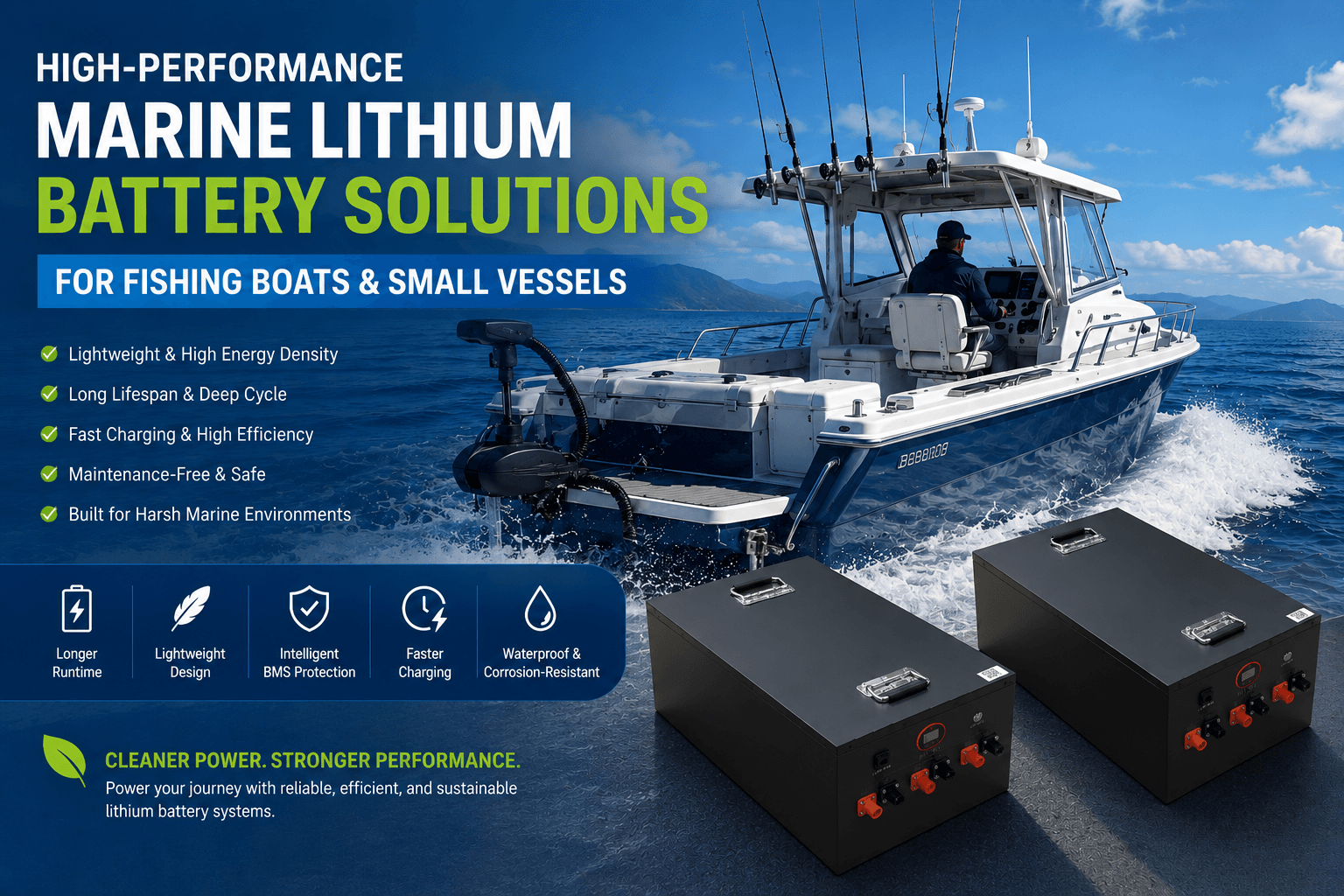
High-Performance Boat Lithium Battery Solutions for Fishing Boats and Small Vessels
2026-05-14
Introduction
As electric propulsion and renewable energy technologies continue to evolve, more fishing boats, small yachts, and workboats are switching to cleaner and more efficient power systems. Traditional lead-acid batteries are no longer able to meet modern marine demands due to their heavy weight, short lifespan, slow charging speed, and high maintenance requirements.
Today, battery boat systems powered by lithium technology are becoming the preferred solution for marine energy storage and propulsion applications. Whether for commercial fishing operations or recreational boating, selecting the best boat batteries marine users can rely on is essential for improving safety, efficiency, and long-term operating performance.
Compared with traditional marine batteries, lithium marine batteries offer:
-
Higher energy density
-
Longer cycle life
-
Faster charging speed
-
Lower maintenance requirements
-
More stable power output
For fishing boats and small vessels operating for extended periods at sea, a reliable marine power system directly impacts navigation safety, equipment stability, and fuel efficiency.
What Is a Marine Lithium Battery?
A marine lithium battery is a rechargeable energy storage system specifically designed for marine environments. These batteries are widely used in:
-
Electric propulsion systems
-
Trolling motors
-
Navigation equipment
-
Communication systems
-
Onboard lighting
-
Solar marine energy storage systems
Modern marine lithium batteries are engineered to withstand vibration, humidity, salt spray, and temperature fluctuations commonly found in harsh marine conditions.
Why Lithium Batteries Are Replacing Traditional Marine Batteries
Lightweight Design Improves Boat Performance
One of the biggest advantages of lithium batteries is weight reduction.
Compared with lead-acid batteries, lithium batteries can reduce total battery weight by approximately 30%–70% while delivering the same usable energy capacity.
Benefits include:
-
Improved boat speed
-
Better fuel efficiency
-
Easier installation
-
Enhanced maneuverability
-
Increased payload capacity
For small fishing boats and compact vessels, reducing weight significantly improves overall performance and operational efficiency.
Higher Energy Density
Lithium batteries store more energy in a smaller space.
This allows:
-
Longer cruising range
-
Extended operating time
-
More onboard equipment support
-
Greater energy efficiency
High energy density is especially important for electric propulsion systems and advanced marine electronics.
Longer Cycle Life
Many boat owners ask: how long do boat batteries last?
Traditional lead-acid marine batteries often last only a few hundred charging cycles, especially under deep discharge conditions.
In comparison, high-quality lithium marine batteries typically support:
-
Thousands of charge-discharge cycles
-
8–15 years of service life
-
Lower long-term replacement costs
This makes lithium batteries a more cost-effective long-term investment for both commercial and recreational marine users.
Faster Charging Capability
Fast charging has become increasingly important for modern marine operations.
Lithium batteries support significantly faster charging compared with traditional marine batteries, helping vessels:
-
Reduce dock charging time
-
Improve operational efficiency
-
Minimize downtime
-
Return to operation faster
For commercial fishing fleets, faster charging directly increases productivity.
Maintenance-Free Operation
Traditional flooded lead-acid batteries require regular maintenance such as:
-
Water refilling
-
Terminal cleaning
-
Voltage balancing
Lithium batteries are virtually maintenance-free, reducing labor costs and simplifying daily operation.
Why Fishing Boats and Small Vessels Prefer Lithium Battery Systems
Longer Operating Time
Lithium batteries support deeper discharge without significantly reducing battery lifespan.
This allows boat owners to safely utilize more stored energy during operation.
Advantages include:
-
Longer fishing hours
-
Fewer charging interruptions
-
Improved operational reliability
-
Better offshore endurance
For fishing boats operating far from shore, stable power supply is essential.
Stable Power Output
Marine electronics require consistent voltage output for reliable operation.
Lithium batteries provide stable power for:
-
GPS systems
-
Fish finders
-
Radar systems
-
Communication devices
-
Refrigeration equipment
-
Water pumps
Stable voltage helps reduce equipment malfunction and improves onboard safety.
Marine Applications of Lithium Battery Systems
Electric Propulsion Systems
Lithium batteries are widely used in:
-
Electric fishing boats
-
Electric outboard motors
-
Hybrid marine propulsion systems
-
Auxiliary marine power systems
Their lightweight structure and high efficiency make them ideal for electric marine applications.
Solar Energy Storage for Boats
More boat owners are combining solar panels with lithium battery storage systems.
Marine solar energy storage solutions help:
-
Reduce fuel consumption
-
Improve energy independence
-
Lower generator runtime
-
Reduce onboard noise
For long-distance marine operations, solar + lithium systems provide an efficient renewable energy solution.
Lithium Cranking Battery for Boat Applications
A lithium cranking battery for boat systems is specifically designed to deliver high starting current for marine engines.
Compared with traditional starter batteries, lithium cranking batteries offer:
-
Faster engine starting
-
Higher cold cranking performance
-
Reduced battery weight
-
Longer service life
-
Better vibration resistance
These batteries are becoming increasingly popular for high-performance fishing boats and recreational vessels.
Key Features of High-Performance Marine Lithium Batteries
Waterproof and Corrosion-Resistant Design
Marine environments expose batteries to:
-
Saltwater
-
High humidity
-
Constant vibration
-
Corrosive conditions
High-quality marine lithium batteries typically feature:
-
Waterproof housing
-
Salt spray resistance
-
Corrosion-resistant materials
-
Reinforced structural protection
These features improve long-term reliability in harsh marine environments.
Intelligent BMS Protection System
Modern marine lithium batteries are equipped with advanced Battery Management Systems (BMS).
The intelligent BMS provides:
-
Overcharge protection
-
Over-discharge protection
-
Over-current protection
-
Short-circuit protection
-
Temperature monitoring
-
Cell balancing management
This significantly improves system safety and battery lifespan.
Wide Temperature Adaptability
Marine environments often experience extreme temperature changes.
High-quality lithium batteries support:
-
Stable high-temperature operation
-
Improved low-temperature discharge performance
-
Reliable operation across different climates
This makes them suitable for various marine environments worldwide.
Marine Lithium Batteries vs Lead-Acid Batteries
|
Feature
|
Marine Lithium Battery
|
Traditional Lead-Acid Battery
|
|---|---|---|
|
Weight
|
Lighter
|
Heavier
|
|
Cycle Life
|
Longer
|
Shorter
|
|
Charging Speed
|
Faster
|
Slower
|
|
Usable Capacity
|
Higher
|
Lower
|
|
Maintenance
|
Minimal
|
Frequent
|
|
Energy Efficiency
|
Higher
|
Lower
|
|
Long-Term Cost
|
Lower
|
Higher
|
From a long-term operational perspective, lithium batteries deliver better efficiency, reliability, and overall value.
How to Choose the Right Marine Lithium Battery
Choose Based on Boat Type
Different vessels require different battery configurations.
Examples:
-
Small fishing boats → medium-capacity systems
-
Commercial fishing vessels → high-capacity systems
-
Electric yachts → lightweight high-energy systems
Evaluate Power Consumption
When selecting a marine battery system, consider:
-
Motor power requirements
-
Daily energy consumption
-
Navigation duration
-
Backup power demand
-
Electronic equipment load
Proper battery sizing improves efficiency and reduces operating costs.
Work with a Professional Marine Battery Manufacturer
Professional manufacturers can provide customized marine battery solutions including:
-
Custom voltage
-
Custom capacity
-
Communication protocols
-
Waterproof housing
-
Marine-grade protection design
-
Compact installation dimensions
Customized solutions ensure better compatibility with different vessel structures and marine applications.
Future Trends of Marine Lithium Battery Technology
As marine electrification accelerates, marine lithium batteries are evolving toward:
-
Higher energy density
-
Longer cycle life
-
Faster charging
-
Smarter battery management
-
Safer energy storage systems
The marine industry is rapidly adopting lithium technology for both commercial and recreational applications.
Conclusion
For fishing boats and small vessels, high-performance marine lithium batteries provide significant advantages in:
-
Energy efficiency
-
Long service life
-
Lightweight construction
-
Safety performance
-
Intelligent energy management
Compared with traditional marine batteries, lithium technology offers a more efficient, environmentally friendly, and reliable marine power solution.
As electric and hybrid marine systems continue to expand, lithium batteries are becoming one of the most important technologies driving the future marine energy market.
FAQ
What are the best boat batteries marine users should choose?
The best marine batteries depend on vessel type, power demand, and operating environment. Lithium marine batteries are increasingly preferred because they provide lighter weight, longer lifespan, faster charging, and higher efficiency compared with traditional lead-acid batteries.
How long do boat batteries last?
Battery lifespan depends on battery type and usage conditions.
-
Lead-acid marine batteries typically last 2–5 years
-
High-quality lithium marine batteries can last 8–15 years with proper maintenance
Lithium batteries also support significantly more charging cycles.
Is a lithium cranking battery for boat engines safe?
Yes. Modern lithium cranking batteries include intelligent BMS protection systems that help prevent overcharging, overheating, and short circuits while ensuring reliable engine starting performance.
Are lithium batteries suitable for fishing boats?
Absolutely. Lithium batteries provide long operating time, lightweight performance, stable power output, and low maintenance, making them ideal for fishing vessels and commercial marine operations.
Can marine lithium batteries work with solar systems?
Yes. Marine lithium batteries are commonly integrated with solar charging systems to create efficient renewable energy solutions for boats and small vessels.
Do lithium marine batteries require maintenance?
Very little. Unlike flooded lead-acid batteries, lithium batteries generally do not require regular watering or intensive maintenance.
What Is Lithium Battery Communication? How BMS Communication Works with Inverters and Battery Systems
What Kind of Battery Does a Forklift Use ? A Complete Guide to Forklift Batteries in 2026
Related Article

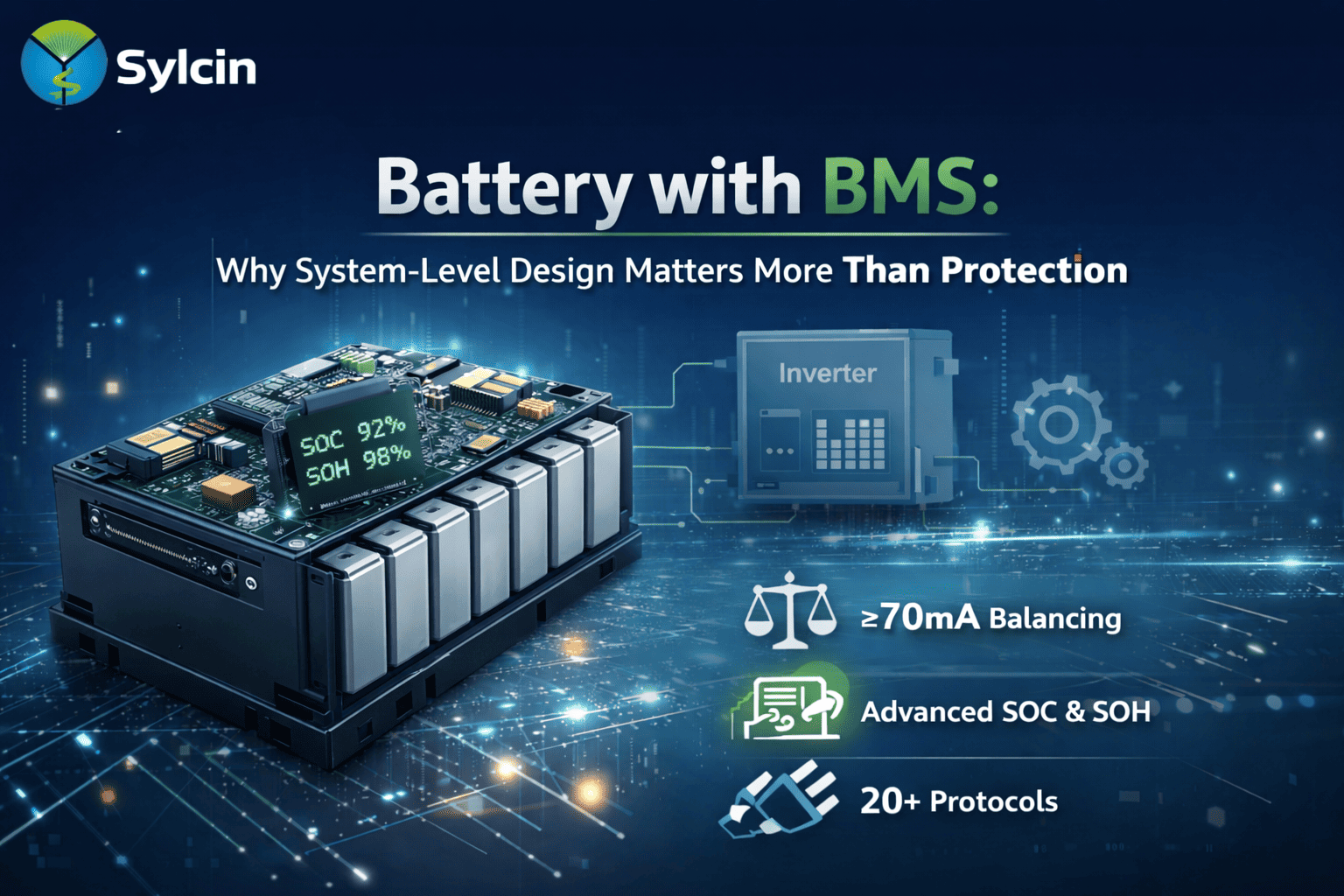
Learn what lithium battery communication is, how BMS exchanges data with inverters, chargers, and control systems, and why communication is essential for safe and intelligent battery operation.
What Is Lithium Battery Communication? How BMS Communication Works with Inverters and Battery Systems


Best Selling Product








Would you like to talk to us about your battery project?

+0086 075527616594

sylcin02@sylcin.com

Room 1701, Building A, Zhongan Science and Technology Park, Dalang Street, Longhua District, Shenzhen