


What Is Lithium Battery Communication? How BMS Communication Works with Inverters and Battery Systems

Introduction
In practical applications, lithium battery systems often need to work together with various external devices, including:
- Hybrid Inverters
- Energy Management Systems (EMS)
- Power Conversion Systems (PCS)
- Battery Chargers
- Motor Controllers
- Cloud Monitoring Platforms
What Is Lithium Battery Communication?
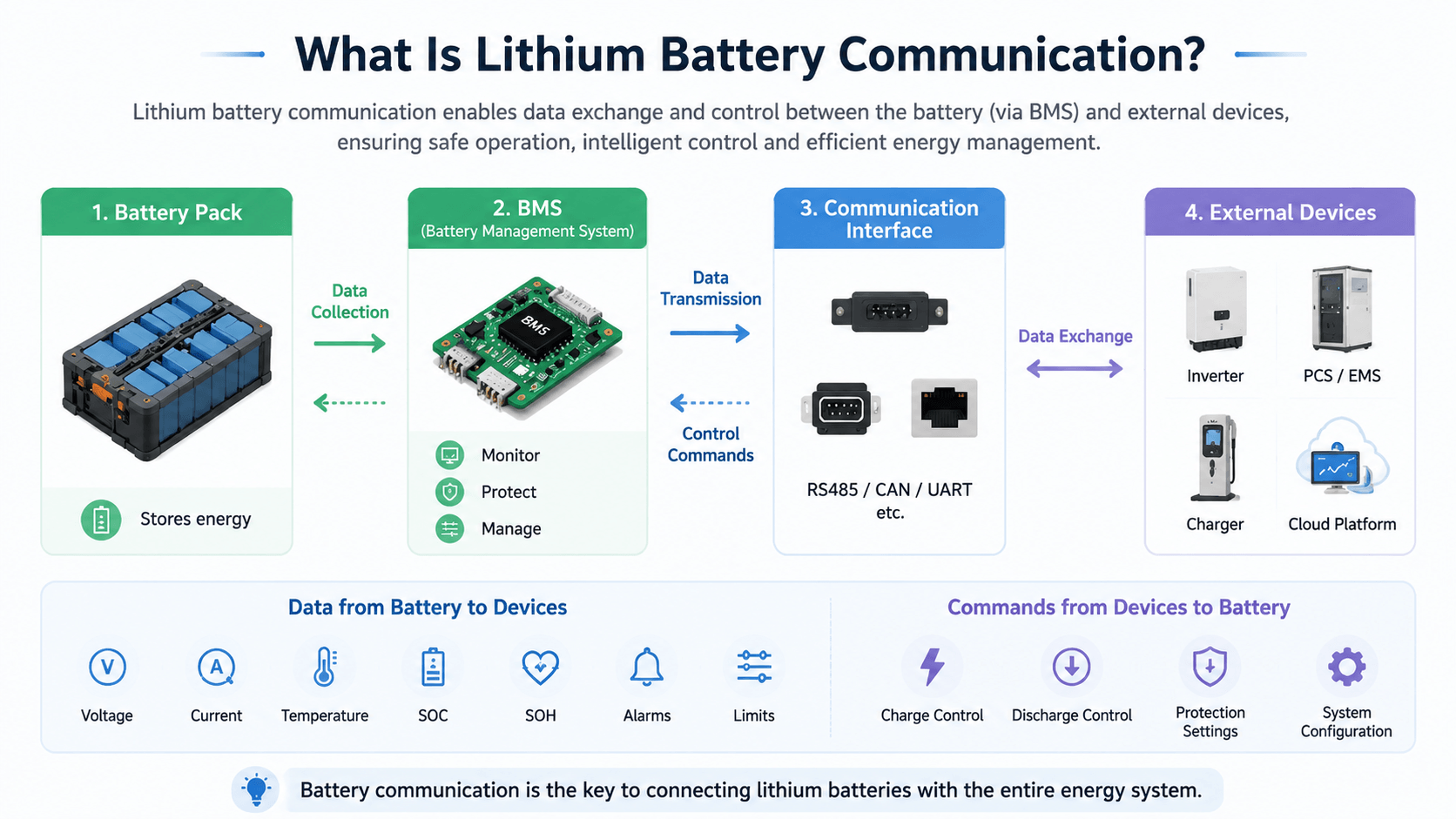
Simply speaking, communication allows the battery to:
- Hybrid Inverters
- Energy Management Systems (EMS)
- Power Conversion Systems (PCS)
- Chargers
- Motor Controllers
- Monitoring Platforms
Through communication, the battery can transmit important operating data, including:
- Battery Voltage
- Charging and Discharging Current
- Battery Temperature
- State of Charge (SOC)
- State of Health (SOH)
- Alarm Information
- Charging and Discharging Limits
Why Do Lithium Batteries Need Communication?
The main functions include:
Real-Time Battery Monitoring
- Cell Voltage
- Battery Voltage
- Current
- Temperature
- State of Charge (SOC)
- State of Health (SOH)
- Remaining battery capacity
- Charging and discharging status
- Battery operating condition
- Warning information
Intelligent Charging and Discharging Control
- Maximum charging current
- Battery capacity status
- Temperature condition
- Charging schedules
- Discharging power
- Energy distribution strategies
Safety Protection and Fault Warning
- Overcharge
- Over-discharge
- Overcurrent
- Overtemperature
- Short Circuit
- Cell Imbalance
- Commercial and industrial energy storage systems
- Marine lithium batteries
- Forklift batteries
- AGV batteries
System Integration and Remote Management
Solar Panel- The battery stores energy;
- The BMS manages battery information;
- The communication system transfers data;
- The inverter and EMS control energy flow.
- Remote monitoring
- Fault diagnosis
- Data analysis
- Energy optimization
The Role of BMS in Lithium Battery Communication
The main communication functions of the BMS include:
- Collecting battery operating data
- Calculating SOC and SOH
- Sending battery status information
- Providing charging and discharging limits
- Reporting alarms and protection signals
For example, the BMS can send the following information to the inverter:
- Battery voltage
- Current
- Temperature
- SOC
- Maximum charging current
- Maximum discharging current
- Alarm status
How Does Lithium Battery Communication Work?
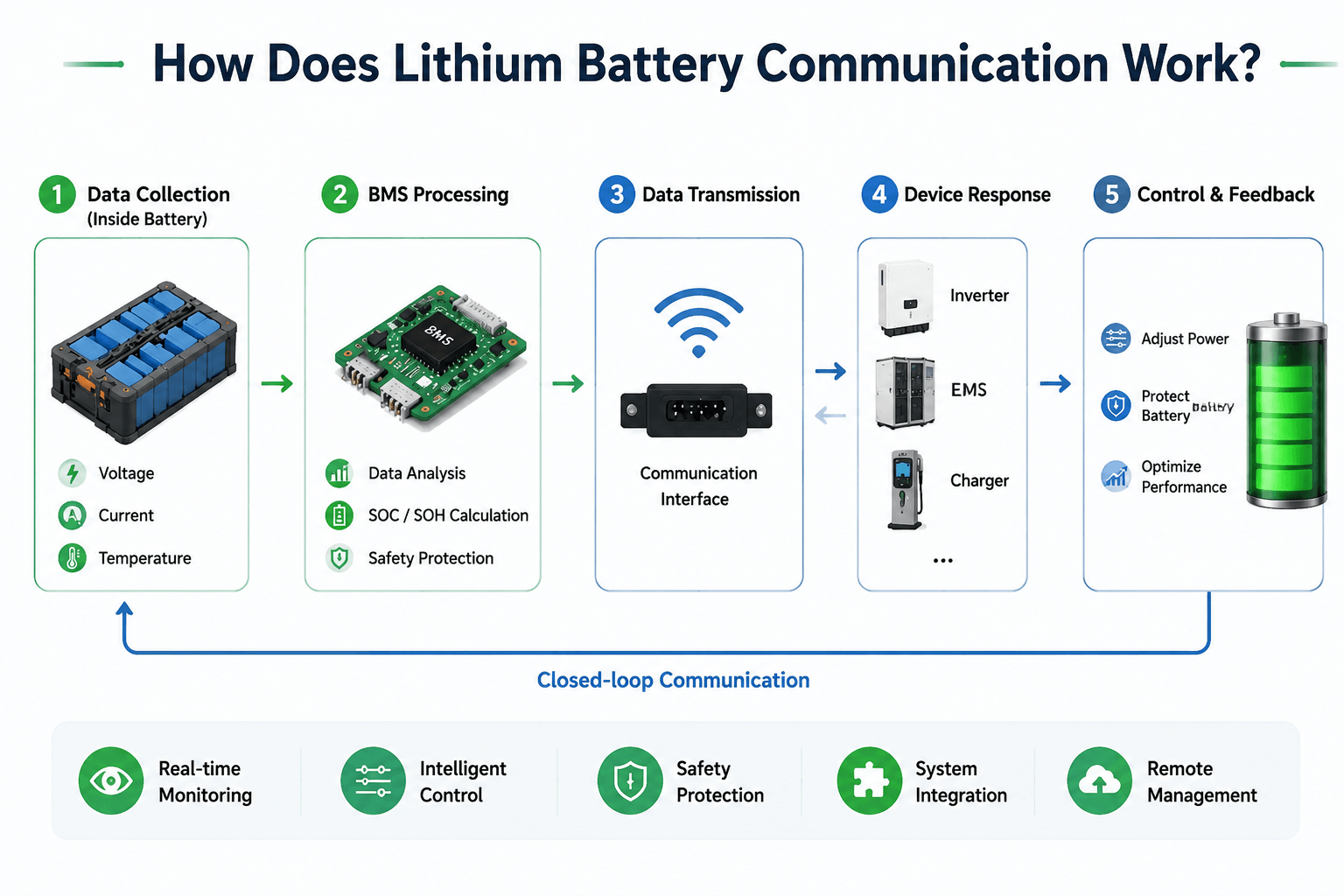
A lithium battery communication system works by collecting battery information through the Battery Management System (BMS) and exchanging data with external devices such as inverters, EMS, chargers, and monitoring platforms.
The communication process follows a simple cycle:
Data Collection → Data Processing → Data Transmission → Device Response
What Data Does Lithium Battery Communication Transmit?
- Total battery voltage
- Individual cell voltage
- Voltage differences between cells
Current Information
- Charging current
- Discharging current
- Current direction
- Maximum allowable current
Temperature Information
- Cell temperature
- Battery module temperature
- Operating temperature status
- Reduce charging or discharging power
- Trigger an alarm
- Stop operation if necessary
- Marine lithium batteries
- Industrial power batteries
- Commercial energy storage systems
State of Charge (SOC)
- Inverters
- EMS
- Monitoring platforms
- Vehicle controllers
State of Health (SOH)
- Battery capacity reduction
- Cycle usage
- Internal resistance changes
- Operating history
Alarm and Protection Information
- Overvoltage
- Undervoltage
- Overcurrent
- Overtemperature
- Short circuit
- Cell imbalance
- Reducing power output
- Stopping charging
- Limiting operation
Charging and Discharging Limits
- Maximum charging current
- Maximum discharging current
- Charging voltage limits
- Discharging power limits
Lithium Battery Communication Applications
Home Energy Storage Systems
- Solar energy storage
- Backup power
- Battery charging and discharging
- Household energy consumption
During the day, solar energy can charge the battery when excess power is available.
At night, the battery can supply electricity to household loads.
Through battery communication, the inverter can optimize energy usage according to battery status.
Learn more about SylCin residential solutions: Home Energy Storage Batteries
Commercial and Industrial Energy Storage Systems
- Energy monitoring
- Peak shaving
- Load management
- System protection
- Remote operation
Marine Lithium Battery Systems
- Lithium battery systems
- Motor controllers
- Displays
- Marine monitoring systems
- Battery status
- Remaining energy
- Power output
- System alarms
Industrial Power Batteries
- Battery status monitoring
- Controller interaction
- Charging management
- Safety protection
Battery Communication vs Communication Protocol
Although battery communication and communication protocols are closely related, they represent different concepts.
Battery communication refers to the overall process of data exchange between the battery and external systems.
Communication protocols define the rules for how this data is transmitted and interpreted.
Different applications use different communication protocols depending on:
- Data requirements
- Communication distance
- System complexity,
- Operating environment
Common lithium battery communication protocols include:
- CAN Bus
- RS485
- RS232
- UART
The next article will provide a detailed comparison of these communication protocols, including their working principles, advantages, limitations, and suitable applications.
Conclusion
- Real-time monitoring
- Intelligent energy management
- Safety protection
- Remote operation
- System integration
- Home Energy Storage Batteries
- Commercial Energy Storage Systems
- Marine Battery Solutions
- Custom Lithium Battery Solutions
High-Performance Boat Lithium Battery Solutions for Fishing Boats and Small Vessels
Related Article



Best Selling Product









Would you like to talk to us about your battery project?

+0086 075527616594

sylcin02@sylcin.com

Room 1701, Building A, Zhongan Science and Technology Park, Dalang Street, Longhua District, Shenzhen