


Lithium vs Lead-Acid Forklift Batteries: Cost, Performance and Lifespan Comparison
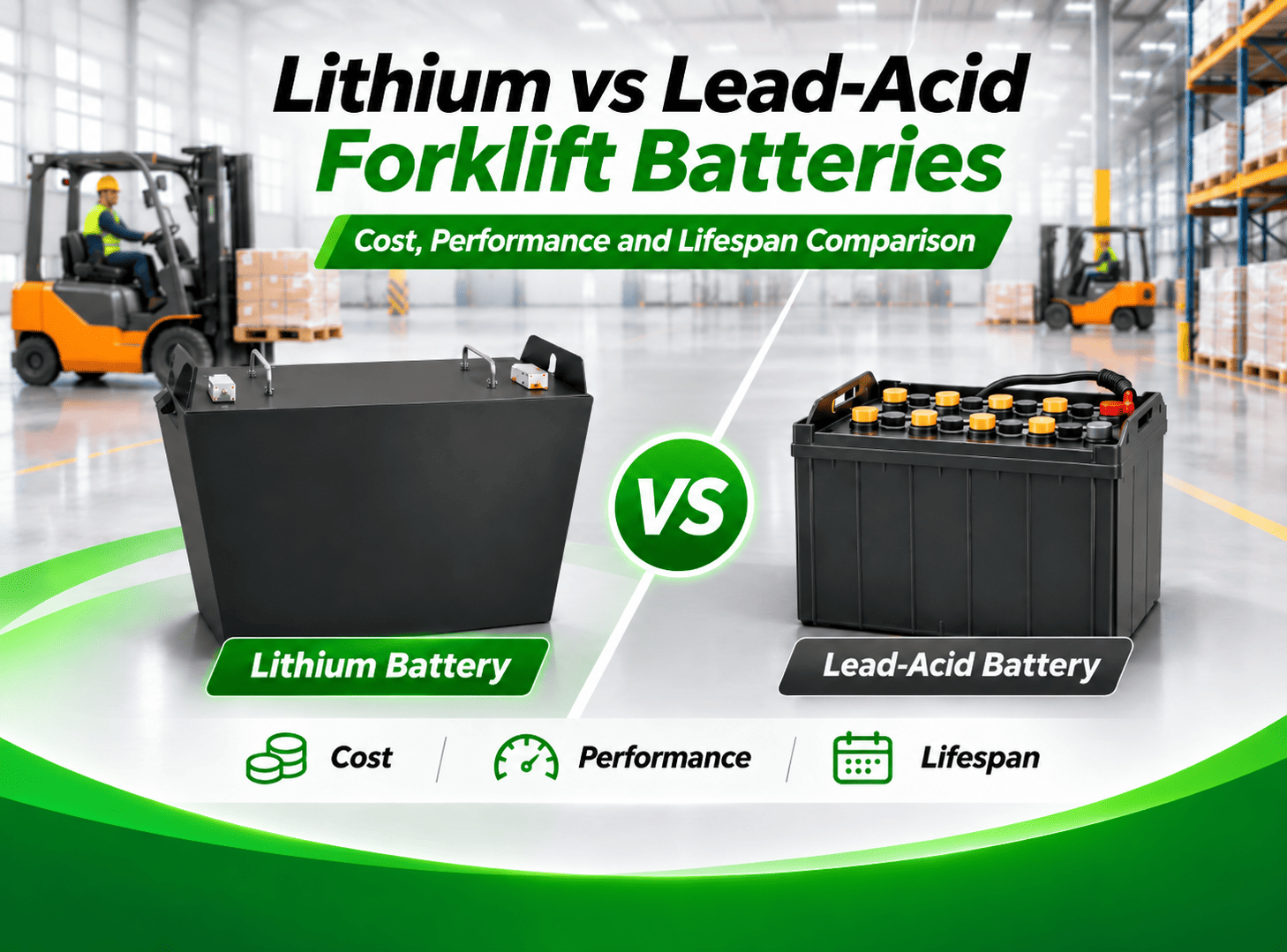
Choosing the right forklift battery affects more than the equipment’s purchase price. It can influence charging schedules, maintenance workload, operating time, energy consumption and long-term fleet costs. For many warehouses and industrial facilities, the decision comes down to a traditional lead-acid battery or a modern lithium-ion battery.
A lead-acid forklift battery may have a lower upfront price and can remain suitable for operations with predictable shifts and established battery-maintenance facilities. A lithium forklift battery, particularly a LiFePO4 system designed for industrial use, can offer more flexible charging, less routine maintenance and high energy efficiency.
This guide compares lithium vs lead-acid forklift batteries across cost, performance, charging, lifespan and maintenance. It also explains what fleet managers and equipment manufacturers should check before choosing a replacement or specifying a new electric forklift battery.
1. What Is the Difference Between Lithium and Lead-Acid Forklift Batteries?
A lead-acid forklift battery stores energy through an electrochemical reaction between lead-based plates and an electrolyte. Flooded lead-acid models require regular checks and water replenishment, while sealed designs have different maintenance requirements.
A lithium-ion forklift battery stores energy using lithium-based cells controlled by a battery management system (BMS). Lithium-ion is a broad battery category; LiFePO4 (lithium iron phosphate) is one chemistry commonly selected for industrial traction applications because of its thermal stability and cycle-life characteristics.
The practical difference is not simply the cell chemistry. The complete battery system—including its BMS, enclosure, connectors, charger compatibility and integration with the forklift—determines how it performs in service.
2. Lithium vs Lead-Acid Forklift Battery: Key Differences
The table below provides a general comparison. Actual performance depends on battery design, capacity, operating temperature, depth of discharge, charger settings and the forklift manufacturer’s requirements.
|
Comparison
|
Lead-Acid Forklift Battery
|
Lithium-Ion Forklift Battery
|
|
Initial purchase cost
|
Usually lower
|
Usually higher
|
|
Routine maintenance
|
Flooded types require electrolyte checks and watering
|
Generally low routine maintenance
|
|
Charging strategy
|
Often planned around longer charging and cooling periods
|
Can support opportunity charging when approved
|
|
Charging efficiency
|
Generally lower
|
Generally higher
|
|
Usable energy
|
Can be affected by discharge rate and operating practice
|
Often provides a higher usable-energy proportion, depending on design
|
|
Battery monitoring
|
Depends on battery and equipment configuration
|
BMS can monitor voltage, current and temperature
|
|
Multi-shift operation
|
May require battery changes or planned charging arrangements
|
Can reduce the need for battery changes when correctly sized and charged
|
|
Total cost of ownership
|
Influenced by maintenance, energy and replacement frequency
|
Influenced by upfront price, energy use, service life and integration costs
|
There is no universal winner for every forklift. A suitable choice should be based on the duty cycle, charging access, operating environment, available maintenance resources and the total cost over the planned service period.
3. Initial Cost vs. Total Cost of Ownership
3.1 Why Does a Lithium Forklift Battery Cost More?
A lithium forklift battery generally has a higher initial purchase price because the system includes lithium cells, a BMS, protective components and a purpose-designed enclosure. The charger or forklift interface may also need to be checked or adapted. The final price varies with voltage, capacity, discharge current, enclosure, communication functions and order quantity.
3.2 What Costs Should Buyers Compare?
Comparing purchase prices alone can give an incomplete picture. Fleet owners should estimate the cost of electricity, routine maintenance, battery replacement, spare batteries, charging infrastructure, downtime and any required equipment modifications.
-
Purchase and installation cost of the battery system.
-
Energy consumed during normal charging.
-
Maintenance labor, consumables and service requirements.
-
Battery replacement and spare-battery requirements.
-
Downtime associated with charging, cooling or battery changes.
-
Charger, connector and forklift integration costs.
A lithium forklift battery may offer a lower operating cost in applications with frequent use or multiple shifts, but the result depends on local electricity prices, utilization, battery sizing and the actual service life achieved. Request a duty-cycle-based calculation rather than relying on a generic payback claim.
4. Charging Time and Opportunity Charging
Charging requirements are an important part of the lithium vs lead-acid forklift battery comparison. Lead-acid batteries are commonly charged during planned breaks or between shifts and may require additional time for cooling and, where applicable, equalization charging.
A compatible lithium-ion forklift battery can often accept opportunity charging during scheduled breaks or idle periods. This can help keep equipment available for longer operating schedules, provided the battery manufacturer, charger and forklift system approve the charging method.
Before selecting a charger, confirm the battery’s nominal voltage, charging voltage range, maximum charging current, connector type and communication requirements. Never assume that a charger designed for a lead-acid battery is suitable for a lithium battery.
5. Battery Lifespan and Long-Term Reliability
Forklift battery lifespan is affected by more than chemistry. Depth of discharge, charging behavior, temperature, current demand, storage conditions and maintenance all influence service life.
Flooded lead-acid batteries need correct watering, cleaning and charging practices. Poor maintenance or repeated deep discharges can shorten their useful life. Lithium-ion batteries avoid electrolyte watering, but they still require correct charging, thermal management and BMS protection.
When comparing cycle-life claims, check the test conditions: depth of discharge, charge and discharge rate, temperature, and the end-of-life capacity threshold. A cycle-life figure without these conditions is not enough to predict how long a battery will last in a particular forklift.
6. Maintenance, Safety and Battery Management
6.1 Lead-Acid Battery Maintenance
Flooded lead-acid batteries require routine electrolyte-level checks, watering with the specified water quality, terminal inspection and cleaning. Charging areas must follow applicable ventilation and handling requirements because charging can release hydrogen gas.
6.2 Lithium Battery BMS Protection
A lithium forklift battery uses a BMS to monitor key parameters such as cell or pack voltage, current and temperature. Depending on the design, the BMS can provide protection against overvoltage, undervoltage, overcurrent, short circuit and abnormal temperature conditions.
The BMS does not replace correct system design or operating procedures. Battery installation, wiring, charger configuration and service must follow the battery and forklift manufacturers’ instructions.
7. Which Forklift Operations Benefit Most from Lithium Batteries?
Lithium-ion technology can be especially useful where equipment utilization is high and charging opportunities are available throughout the working day. Potential applications include:
-
Warehouses and distribution centers operating multiple shifts.
-
Manufacturing facilities with frequent material-handling cycles.
-
Cold-storage operations, when the battery is specifically designed and rated for the required temperature range.
-
Forklift fleets seeking to reduce routine battery maintenance.
-
OEM forklift projects requiring a customized battery enclosure, connector or BMS configuration.
Lead-acid batteries may remain a reasonable choice for lower-utilization operations, facilities with existing lead-acid infrastructure, or projects where the initial purchase budget is the overriding constraint.
8. How to Choose the Right Forklift Battery
Before ordering a lithium battery for a forklift or replacing an existing lead-acid pack, collect the following information:
-
Forklift make, model and battery compartment dimensions.
-
Required nominal voltage and battery capacity (Ah or kWh).
-
Peak and continuous discharge current.
-
Daily operating hours, shifts and typical load profile.
-
Available charging windows and charger specifications.
-
Operating temperature, vibration, moisture and other environmental conditions.
-
Connector, cable, mounting and communication requirements.
For OEMs and fleet operators, a customized battery may be needed to match the available battery space, load profile, current demand and vehicle control system. These details should be confirmed before the battery design is finalized.
9. SylCin Custom Lithium Forklift Battery Solutions
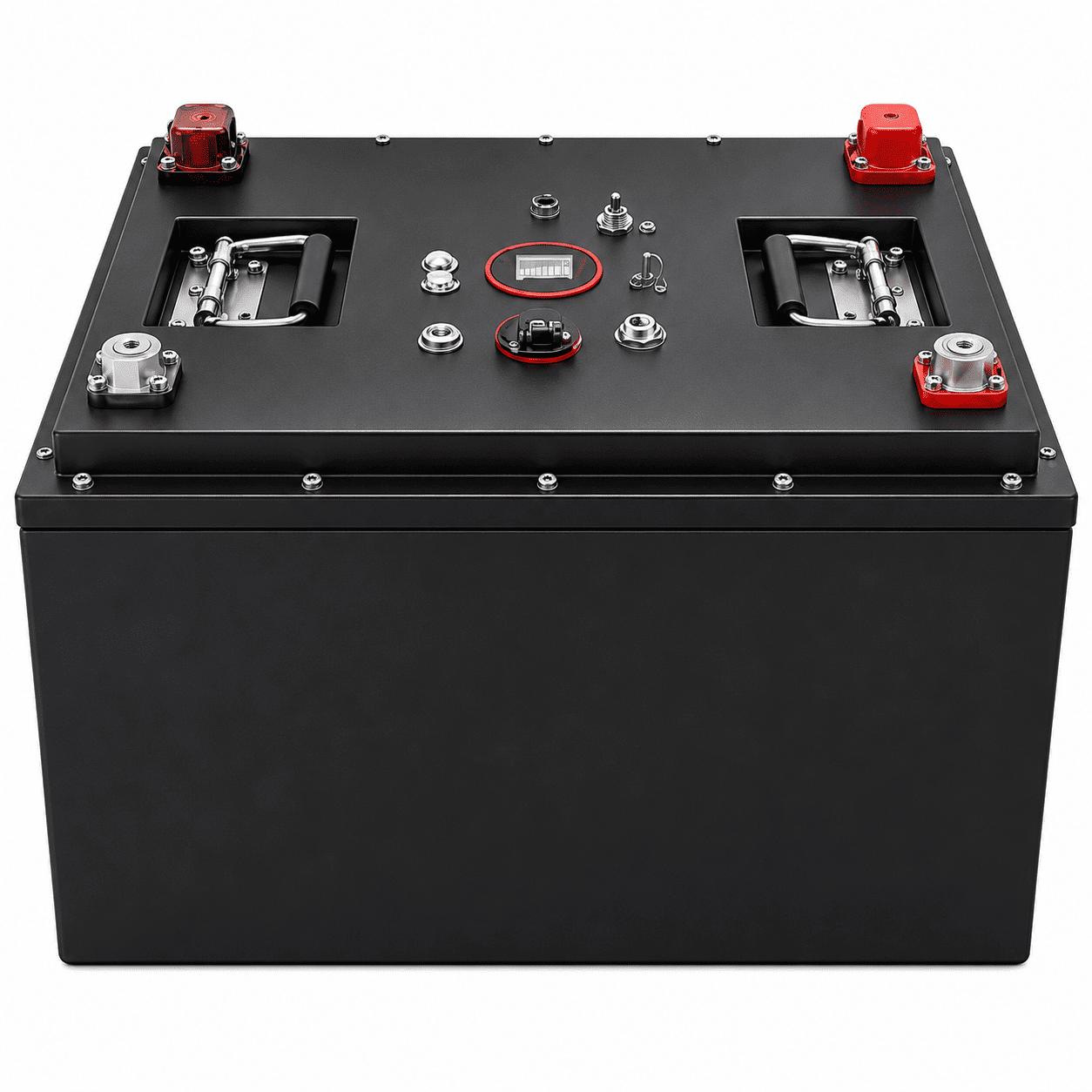
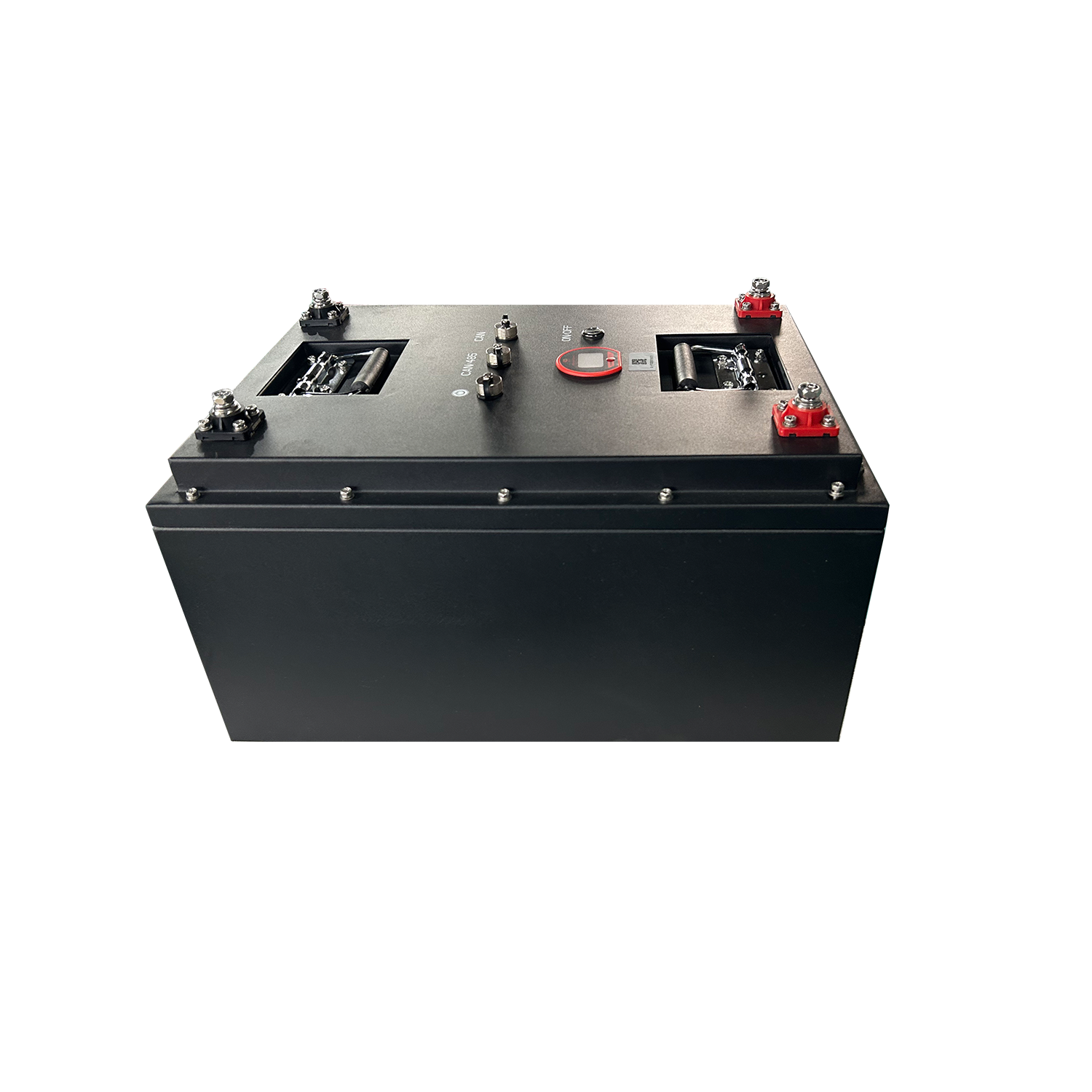
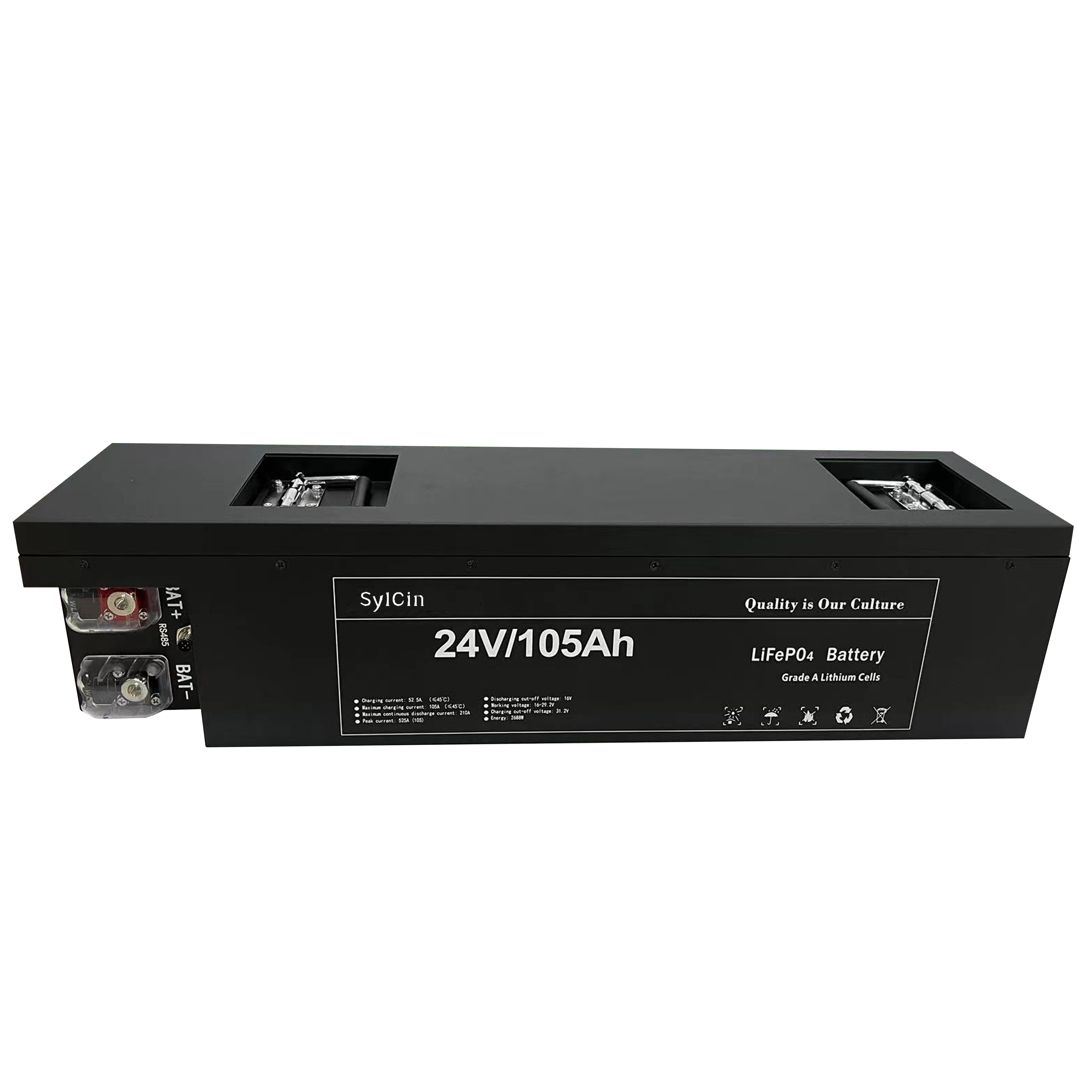
SylCin provides OEM/ODM lithium battery solutions for industrial traction applications, including forklifts and other material-handling equipment. For project-based requirements, battery voltage, capacity, dimensions, enclosure structure, connectors and BMS functions can be evaluated according to the target forklift.
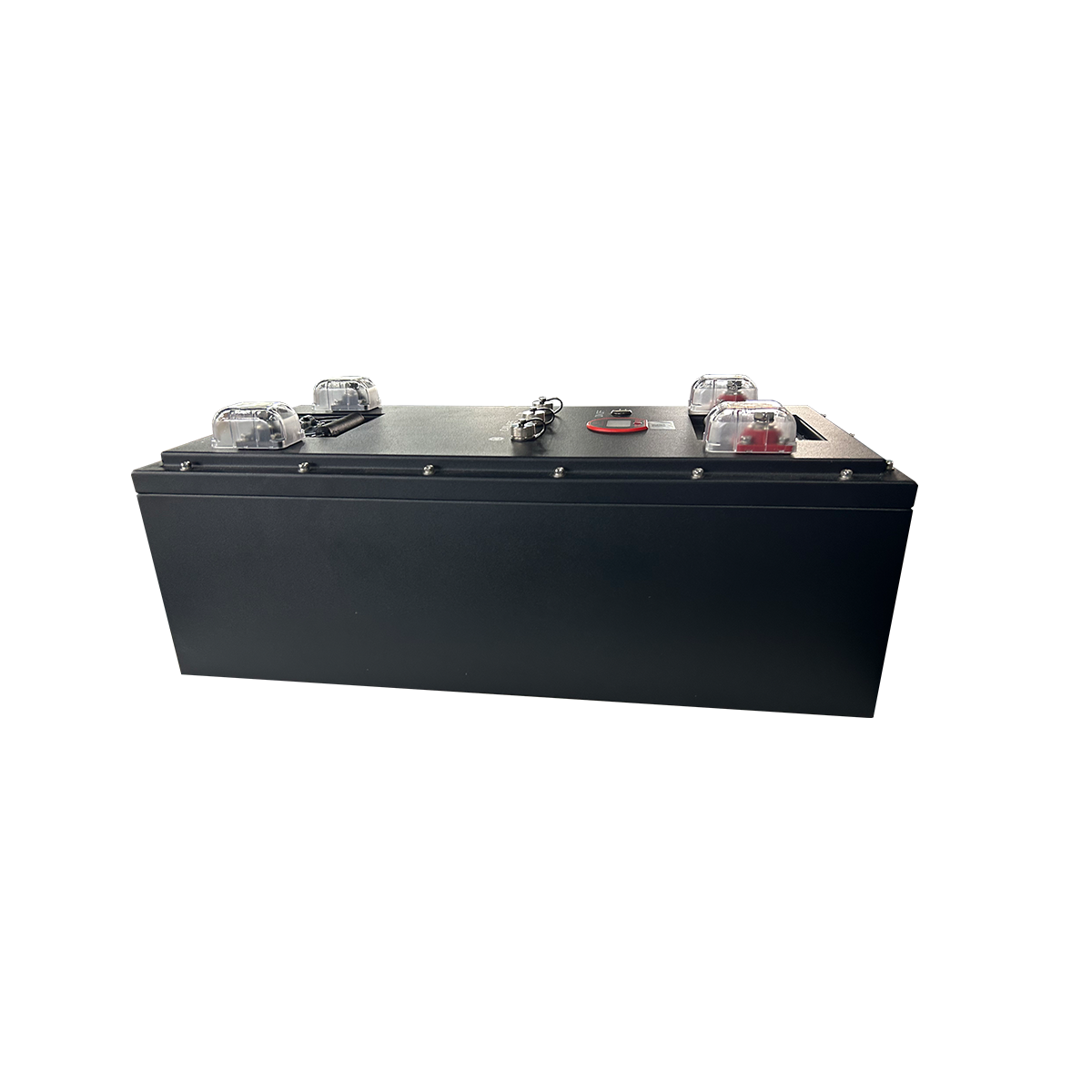
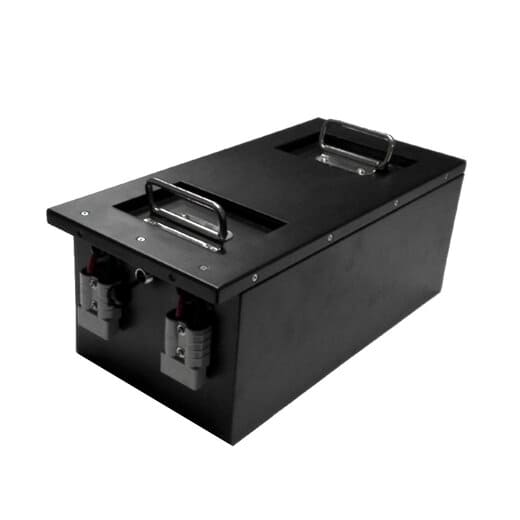
For example, SylCin’s 24V 350Ah traction battery platform is intended for demanding industrial applications. Project configuration should be confirmed against the forklift’s battery compartment, current demand, charging system and operating schedule.
The engineering review can also cover BMS protection settings and communication or monitoring requirements where supported by the target equipment. The objective is to provide a battery system that fits the application—not simply replace one battery chemistry with another.
Explore our Power Battery Solutions, learn more about Custom Lithium Battery Solutions, or discuss your project with SylCin’s team.
10. Frequently Asked Questions
Is a lithium forklift battery better than a lead-acid battery?
It depends on the application. Lithium batteries can offer flexible charging, low routine maintenance and higher charging efficiency. Lead-acid batteries generally have a lower initial cost and may suit predictable, lower-utilization operations.
Why are lithium forklift batteries more expensive?
They typically include lithium cells, a BMS and protective system components. Charger compatibility, enclosure design, capacity and customization also affect the final price.
Can I replace a lead-acid forklift battery with a lithium battery?
Not automatically. Confirm voltage, dimensions, weight requirements, connector, discharge current, charger compatibility and forklift manufacturer approval before replacement.
How long does a lithium forklift battery last?
Service life depends on chemistry, cell quality, depth of discharge, temperature, charging behavior and operating conditions. Compare cycle-life data only when the test conditions are stated.
Can lithium forklift batteries be opportunity charged?
Many lithium forklift batteries support opportunity charging when the battery and compatible charger are designed and approved for that use.
Do lithium forklift batteries need maintenance?
They generally do not require the electrolyte watering used by flooded lead-acid batteries. They still need regular inspection and operation according to the manufacturer’s instructions.
Are all lithium forklift batteries LiFePO4?
No. Lithium-ion includes several chemistries. LiFePO4 is one option used in industrial battery applications.
What information is needed for a custom lithium forklift battery?
Provide the forklift model, voltage, required capacity, battery compartment dimensions, current demand, operating schedule, charger details a nd environmental conditions.
Can a lithium forklift battery work in cold storage?
Only if the battery is designed and rated for the required low-temperature conditions. Confirm charging and discharging temperature limits with the manufacturer.
How do I compare the total cost of lithium and lead-acid forklift batteries?
Include purchase price, charging energy, maintenance, replacement frequency, spare batteries, downtime, charger requirements and installation costs over the same evaluation period.
Conclusion
The choice between lithium and lead-acid forklift batteries depends on operating schedules, charging infrastructure, maintenance resources and long-term cost objectives. Lead-acid batteries can remain practical for predictable operations with a limited initial budget, while a properly specified lithium forklift battery can be attractive for high-utilization fleets that benefit from flexible charging and reduced routine maintenance.
Before making a decision, compare the complete battery system and verify compatibility with the forklift and charger. For OEMs, distributors and fleet operators evaluating a lithium conversion or a new equipment project, SylCin can assess the required voltage, capacity, dimensions, BMS configuration and application conditions.
Get a Custom Solution
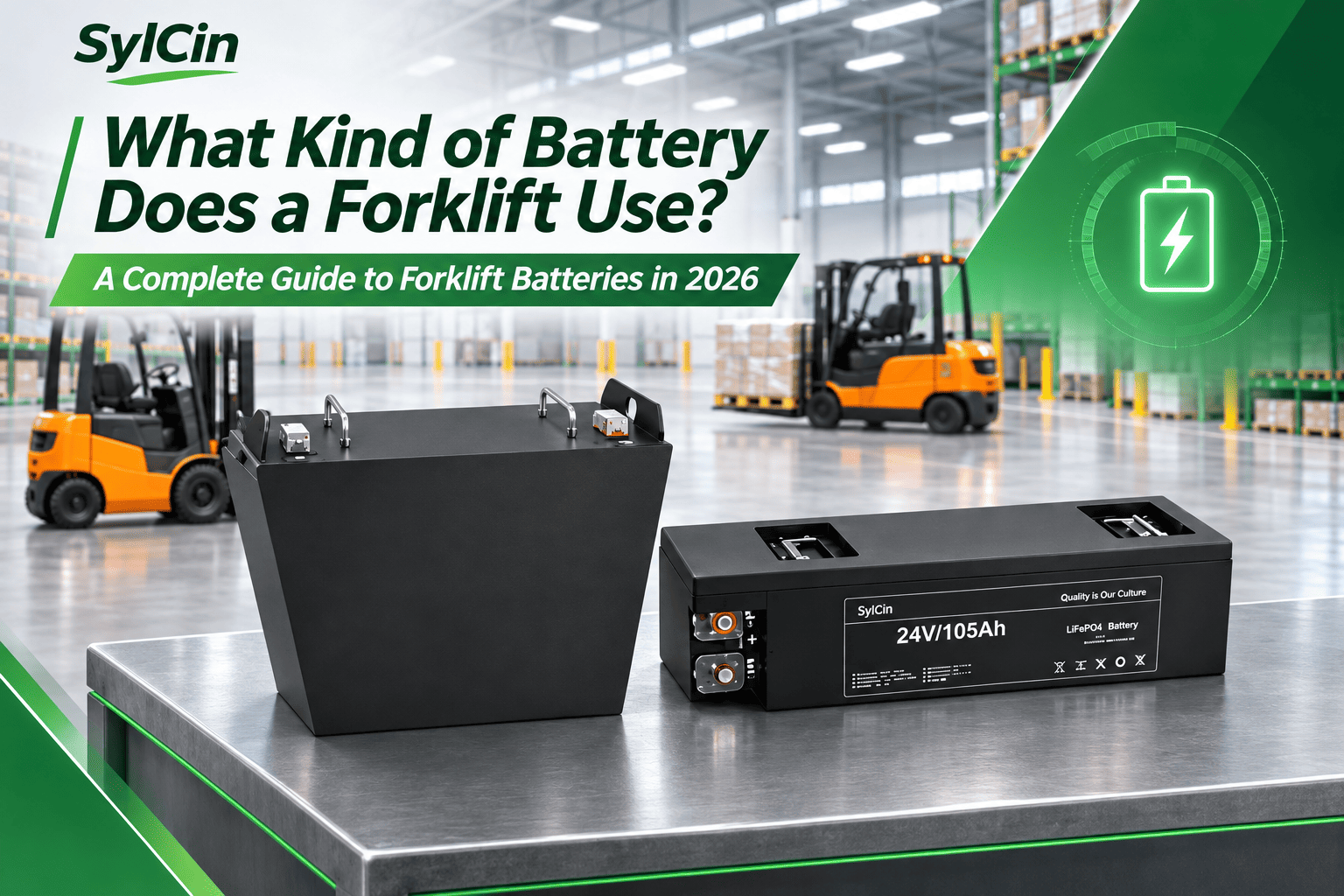
What Kind of Battery Does a Forklift Use?
Best Selling Product




Would you like to talk to us about your battery project?

+0086 075527616594

sylcin02@sylcin.com

Room 1701, Building A, Zhongan Science and Technology Park, Dalang Street, Longhua District, Shenzhen