


What Is a Battery BMS System?
2026-01-22
An In-Depth Guide to Battery BMS Systems, Functions, and Applications
A battery BMS (Battery Management System) is the core control system behind every modern lithium battery pack.
Whether used in energy storage systems (ESS), electric vehicles (EVs), or industrial power applications, a battery BMS plays a decisive role in how safely, efficiently, and reliably a battery operates throughout its entire lifecycle.
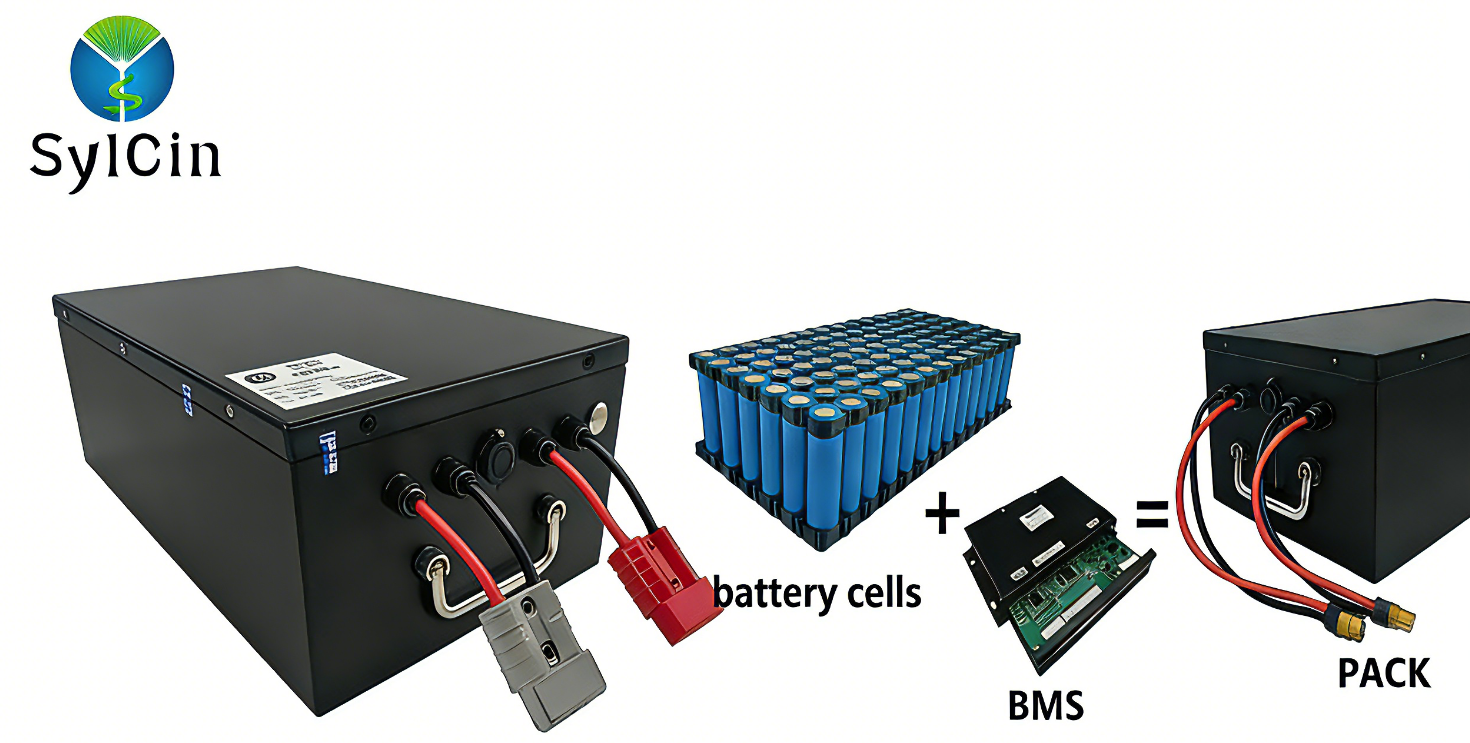
From an engineering perspective, a battery pack is far more than a collection of cells. It is a complete system composed of battery cells, a battery BMS, mechanical structures, and thermal management.
Among these components, the battery BMS functions as the brain of the system—continuously monitoring, regulating, and protecting battery operation.
So, what is BMS system technology really responsible for?
At its core, every battery BMS is designed to achieve three critical objectives: safety, performance, and battery lifespan.
At its core, every battery BMS is designed to achieve three critical objectives: safety, performance, and battery lifespan.
What Is a Battery BMS System?
A Battery Management System (BMS) is an electronic control system that monitors, manages,and protects rechargeable battery packs.
A battery BMS continuously measures key operating parameters—such as voltage, current, temperature, and operating state—to ensure the battery operates safely and efficiently within defined limits.
For lithium-ion and LiFePO₄ batteries, a battery BMS is not optional—it is a fundamental requirement.
Without a BMS, lithium batteries cannot maintain stable performance, long-term reliability, or adequate safety.
Simply put, a lithium battery without a BMS is not suitable for real-world, safety-critical applications.
A battery BMS integrates hardware protection circuits with embedded software algorithms.
When abnormal conditions such as overvoltage, undervoltage, overcurrent, short circuits, or overheating are detected, the BMS immediately limits or interrupts charging and discharging to prevent cell damage, thermal runaway, or safety incidents.
This is why understanding what a BMS system is and how it works is essential for anyone designing, integrating, or operating battery-powered systems.
✅ Core Functions of a Battery BMS
A modern battery BMS integrates multiple core functions that directly determine battery safety, performance, and service life.
These functions work together to ensure stable and reliable operation across different applications.
Battery Protection
Protection is the most fundamental responsibility of a battery BMS. A properly designed battery BMS provides comprehensive protection against:
-
Overcharge protection
-
Over-discharge protection
-
Overcurrent and short-circuit protection
-
High-temperature and low-temperature protection
Without these protection mechanisms, batteries are exposed to accelerated degradation, reduced reliability, and significantly increased safety risks.
Battery Monitoring and State Estimation
A battery BMS continuously monitors key operating parameters, including:
-
Individual cell voltage
-
Total battery pack voltage
-
Charge and discharge current
-
Cell temperature and ambient temperature
Based on real-time measurement data, the battery BMS calculates State of Charge (SOC) and State of Health (SOH). These estimates enable accurate energy management, fault detection, and predictive maintenance throughout the battery lifecycle.
Cell Balancing
Cell imbalance reduces usable capacity and accelerates battery aging.
To address this, a battery BMS performs passive or active cell balancing to maintain voltage consistency across all cells.
Effective balancing significantly improves capacity utilization and extends the overall lifespan of the battery pack.
Communication and System Integration
Modern battery BMS solutions are designed to communicate seamlessly with external systems through protocols such as CAN, RS485, and UART.
These communication interfaces enable the battery BMS to exchange real-time data with inverters, chargers, vehicle control units (VCUs), and energy management systems (EMS), facilitating coordinated control, system-level protection, and intelligent energy optimization.
For advanced lithium battery applications that demand higher reliability, scalability, and precise control, solutions like the Sylcin Advanced Battery BMS provide robust communication architecture and intelligent algorithms, supporting energy storage systems, electric vehicles, and industrial power applications with long-term stability and safety
Battery BMS Architectures: Centralized vs Distributed
Different applications require different battery BMS architectures to balance cost, safety, scalability, and long-term reliability. In real-world lithium battery systems, the most common approaches are centralized and distributed architectures, each designed for specific voltage levels, capacities, and system complexities.
Choosing the right architecture is critical because it directly affects system expandability, fault isolation capability, and maintenance cost over the battery’s lifetime.
Centralized Battery BMS Architecture
A centralized battery BMS uses a single control unit to monitor and manage all battery cells within a pack. All voltage, temperature, and balancing signals are collected by one controller, where protection logic and control decisions are executed.
This architecture is best suited for small to medium-sized battery systems, where the number of cells is limited, and overall system voltage remains relatively low.
Typical applications include:
Power tools
-
Robotics and AGV systems
-
IoT and smart home devices
-
Light electric vehicles such as e-bikes and scooters
The main advantages of a centralized battery BMS are compact structure, lower system cost, and simplified integration.
However, as battery capacity and voltage increase, this approach faces limitations such as longer wiring harnesses, reduced scalability, and a higher risk of single-point failure.
Distributed Battery BMS Architecture
For high-voltage or large-capacity battery systems, a distributed battery BMS has become the industry standard. In this architecture, monitoring and control functions are distributed across multiple hardware layers instead of relying on a single controller.
A typical distributed battery BMS includes:
-
Battery Monitoring Units (BMU) are responsible for cell-level measurements
-
Battery Cluster Units (BCU) that aggregate data and manage battery modules
-
System-level controllers (BAU or BAMS) that coordinate the entire battery system
This multi-layer structure significantly improves scalability and system reliability, making it suitable for large energy storage systems and electric vehicle battery packs. Faults can be isolated at the module or cluster level, reducing the impact on the overall system.
Compared to centralized designs, a distributed battery BMS supports easier system expansion, better compatibility with PCS and EMS platforms, and more robust safety control—at the cost of higher initial complexity.
Centralized vs Distributed Battery BMS: Comparison Table
|
Centralized vs Distributed Battery BMS: Comparison Table
|
||
|
Feature
|
Centralized Battery BMS
|
Distributed Battery BMS
|
|
System structure
|
Single control unit
|
Multi-layer (BMU + BCU + BAU/BAMS)
|
|
Scalability
|
Limited
|
Excellent
|
|
Wiring complexity
|
Low for small systems
|
Optimized for large systems
|
|
Fault isolation
|
Low
|
High
|
|
Suitable voltage level
|
Low to medium
|
Medium to high
|
|
Typical applications
|
Power tools, IoT, light EVs
|
Energy storage, EVs, industrial systems
|
|
Initial system cost
|
Lower
|
Higher
|
|
Long-term reliability
|
Moderate
|
High
|
|
Industry adoption trend
|
Declining for large systems
|
Mainstream solution
|
Key Takeaway
There is no one-size-fits-all battery BMS architecture.
Centralized designs are ideal for compact, cost-sensitive applications, while distributed architectures are essential for large-scale, high-voltage, and mission-critical battery systems.
Centralized designs are ideal for compact, cost-sensitive applications, while distributed architectures are essential for large-scale, high-voltage, and mission-critical battery systems.
Selecting the appropriate battery BMS architecture early in the design phase is one of the most effective ways to improve safety, extend system lifespan, and ensure future scalability.
Battery BMS Applications in Real-World Systems
To fully understand what is BMS system value is, it is important to look at real applications:
Electric vehicles: The battery BMS ensures balanced power delivery and prevents thermal runaway.
Energy storage systems: The battery BMS optimizes charge and discharge cycles to maximize usable capacity.
Industrial power systems: The battery BMS enables remote monitoring, fault diagnosis, and long-term reliability.
In every case, the battery BMS acts as both a safety controller and a performance optimizer.
How Long Does a Battery BMS Last?
A high-quality battery BMS is designed for long-term operation. Under normal conditions, the service life of a battery BMS typically ranges from 5 to 10 years, often matching or exceeding the battery cell lifespan.
While battery BMS failure is possible, it is relatively uncommon. Most failures are caused by extreme environments, improper installation, sustained overload, or low-quality components rather than normal operation.
Can a Battery BMS Extend Battery Life?
Yes—this is one of the most important roles of a battery BMS.
By preventing extreme overcharge and over-discharge, maintaining cell balance, and managing temperature, a battery BMS significantly:
Reduces capacity degradation
Increases cycle life
Minimizes safety risks
In many cases, short battery lifespan is not caused by poor cells, but by an inadequate battery BMS design.
Advanced Battery BMS Solutions for Energy Storage Systems
As battery systems grow larger and more complex, advanced battery BMS solutions become essential.
These systems are engineered to support high-voltage platforms, scalable energy storage architectures, and long-term operational stability—key requirements for commercial and industrial ESS projects.
Such advanced BMS platforms enable system integrators and manufacturers to build safer, smarter, and more reliable battery solutions, while improving fault isolation, system availability, and overall project ROI.
But this also raises an important question in energy storage applications:
Do Lithium Batteries Really Need a BMS?
Conclusion+
A battery BMS is not an accessory—it is the foundation of modern battery systems.
From small battery packs to large-scale energy storage systems, the battery BMS defines safety, performance, and lifespan.
As battery technology continues to evolve, selecting a reliable battery BMS is just as critical as choosing the right battery chemistry. A well-designed battery BMS ensures long-term value, operational safety, and system reliability.
How Close Is Your Lithium Battery to Danger Without a BMS?
How to Safely Expand Off-Grid Solar System Capacity
Related Article

Learn what lithium battery communication is, how BMS exchanges data with inverters, chargers, and control systems, and why communication is essential for safe and intelligent battery operation.
What Is Lithium Battery Communication? How BMS Communication Works with Inverters and Battery Systems



Best Selling Product









Would you like to talk to us about your battery project?

+0086 075527616594

sylcin02@sylcin.com

Room 1701, Building A, Zhongan Science and Technology Park, Dalang Street, Longhua District, Shenzhen