


How Off-Grid Solar System Architecture Works – System Design Explained
2026-01-14
From System Architecture to Daily Energy Flow Explained
In our previous article, What Is an Off-Grid Solar System?, we explained what an off-grid solar system is and where it is typically used.
However, after understanding the definition, most users quickly ask a more practical question:
“I understand that it's off-grid — but how does it actually supply power every day?”
This article does not start with specifications or product lists.
Instead, it explains how off-grid solar systems work in real operation, focusing on:
Instead, it explains how off-grid solar systems work in real operation, focusing on:
- What happens during the daytime when solar energy is available
- Where power comes from at night or during cloudy weather
- How each component cooperates within the system
- Why reliable off-grid systems are always designed around energy storage
1. An Off-Grid Solar System Is Not “Instant Power When the Sun Shines”
A common misconception is:
Solar panels generate electricity → power is used immediately by loads.
In reality, this approach does not work in off-grid environments because:
- Solar output is inherently unstable
- Power fluctuates with clouds, time of day, and seasons
- Electrical loads require continuous and stable power
For this reason, all properly designed off-grid systems follow one core principle:
→ Energy must be stored before it is used.
2. The Real Energy Flow Inside an Off-Grid Solar System
From an operational perspective, electricity in an off-grid solar system always flows in the following order:
Solar Panels → Charge Controller → Battery System → Inverter → Loads
This sequence is not about industry convention.
It exists to ensure system stability under all operating conditions.
It exists to ensure system stability under all operating conditions.
Let's walk through how this works in real-life use.
3. What Happens During the Day When the Sun Is Available?

Step 1: Solar panels generate power — but it is not yet usable
When sunlight hits the solar panels, they produce DC electricity.
However, this power:
However, this power:
-
Has fluctuating voltage
-
Depends entirely on solar irradiance
-
Cannot be supplied directly to most loads
Step 2: The charge controller stabilizes incoming energy
At this stage, the charge controller plays a critical role:
-
Regulating PV input voltage
-
Controlling charging current
-
Protecting downstream components
You can think of the controller as the system's energy traffic manager.
Step 3: Energy is stored in the battery system
In a properly designed off-grid architecture, daytime solar energy is routed first into the battery system:
-
Excess energy is stored instead of wasted
-
The battery establishes a stable voltage platform (commonly 48V)
This step determines whether the system can operate reliably after sunset.
4. How the System Supplies Power at Night or During Bad Weather
When solar generation stops:
-
The system does not switch modes
-
Loads do not experience interruptions
This is because:
→ The battery system becomes the primary power source.
Stored DC energy is delivered through the inverter, which converts it into AC power and supplies it continuously to connected loads.
5. Why Off-Grid Systems Must Be Battery-Centered
This is one of the most misunderstood — yet most critical — aspects of off-grid system design.
In off-grid solar systems, the component that actually supplies power to loads is the battery system, not the solar panels.
5.1 Solar panels generate energy, but they do not supply power
Solar panels are highly dependent on environmental conditions:
-
They only work during daylight
-
Output fluctuates continuously
-
They produce no power at night
Without a battery, continuous power delivery is impossible.
5.2 The battery system is the system's true power source
In a well-designed off-grid system:
-
Solar panels generate energy
-
The battery system stores and releases energy
-
Loads always draw power from the battery side
From the load's perspective, sunlight does not matter — battery stability does.
This is why SylCin treats battery architecture as the foundation of every off-grid project.
5.3 What happens when the battery is not treated as the core?
In real projects, poorly designed systems often experience:
-
Voltage fluctuations causing device restarts
-
Protection shutdowns during passing clouds
-
Insufficient nighttime runtime
In most cases, the root cause is the same:
→ An undersized or poorly integrated battery system.
→ An undersized or poorly integrated battery system.
5.4 Why SylCin designs the battery first
SylCin's design sequence always follows this order:
-
Analyze load types and usage behavior
-
Design the battery voltage platform and capacity
-
Match inverter power accordingly
-
Size the solar array last
This ensures the system can handle real-world load dynamics and future expansion.
5.5 Why the 48V battery platform is the industry standard
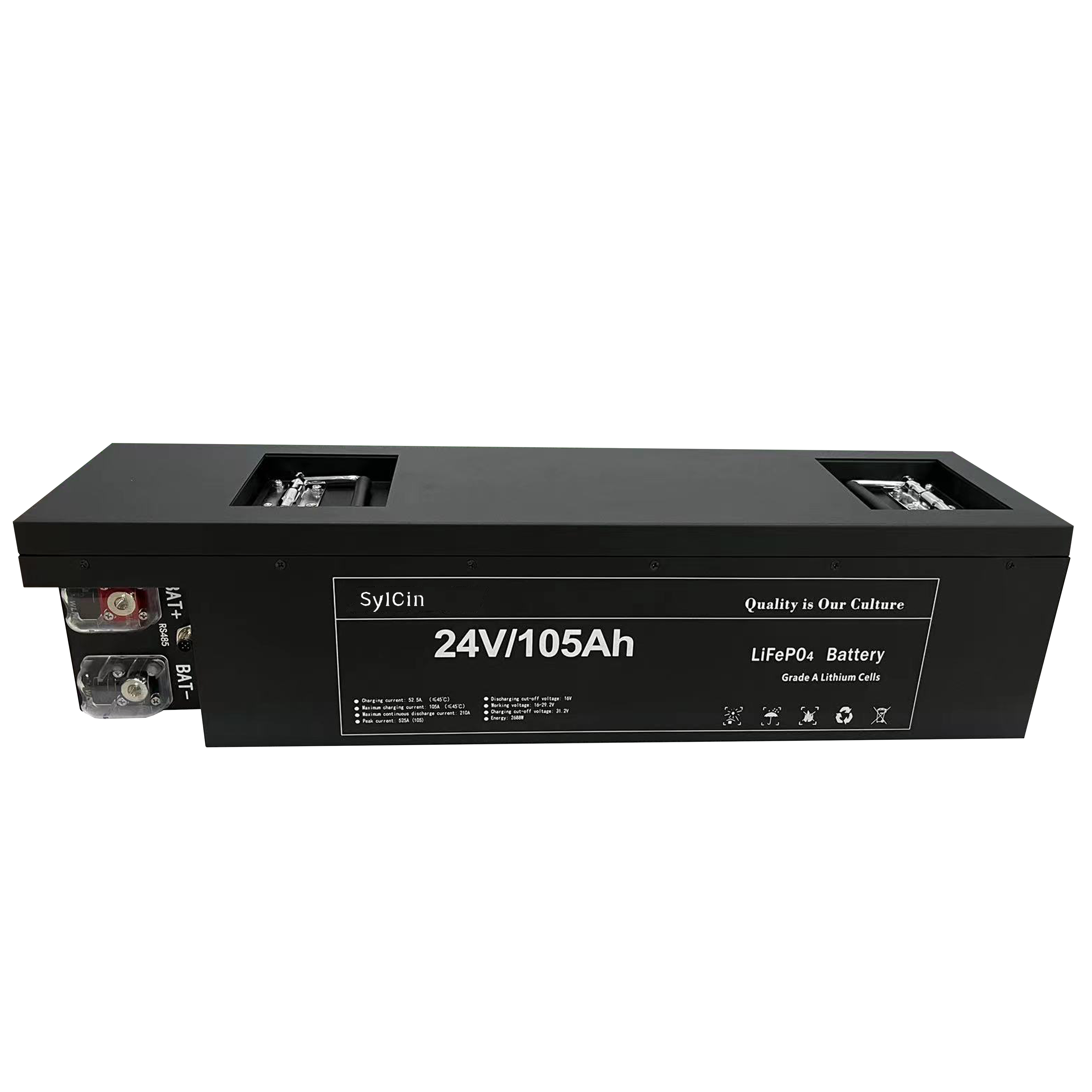
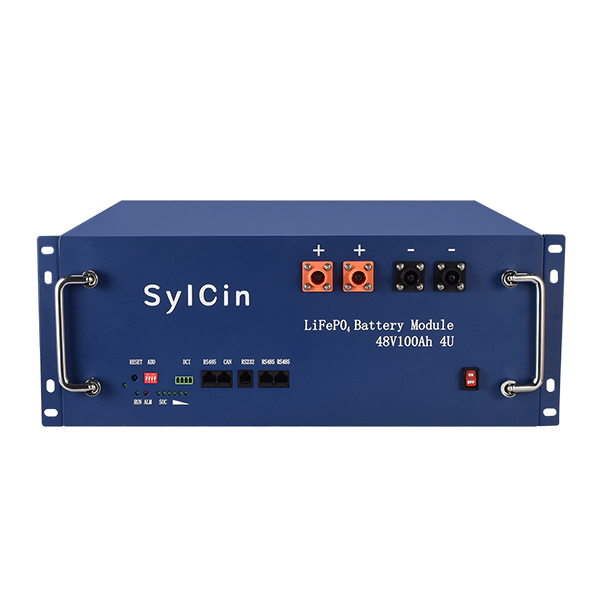
For residential and small commercial off-grid systems, the 48V LiFePO₄ battery platforms offer:
-
Lower current and reduced system losses
-
A strong balance between safety and efficiency
-
Easy parallel expansion
-
High compatibility with mainstream inverters
This is why SylCin commonly deploys 48V LiFePO₄ batteries in off-grid designs.
5.6 What the battery determines in daily operation
From a user's perspective, the battery answers three practical questions:
-
Can the system run reliably at night?
-
Can it handle sudden load increases?
-
Can capacity be expanded without rebuilding the system?
6. What Role Does the Inverter Actually Play?
The inverter is responsible for:
-
Converting DC power from the battery into AC
-
Supplying power according to load demand
-
Managing parallel operation in larger systems
However, the inverter does not create system stability.
Stability originates from the battery system.
Stability originates from the battery system.
7. Does System Size Change How Off-Grid Solar Systems Work?
The working principle remains the same, but design priorities shift:
| System Size | Design Focus |
| ≤5kW | Simplicity, reliability, easy maintenance |
| 5–20kW | Modular batteries, parallel expansion |
| 20–80kW | Multi-inverter parallel operation, load zoning |
| Small C&I | Redundancy, avoidance of single-point failure |
8. How to Tell If an Off-Grid System Is Well Designed
Ask these operational questions:
-
Can it run stably without sunlight?
-
Does the battery handle primary power delivery?
-
Can the system be expanded without redesign?
-
Will a single failure shut down the entire system?
Practical Takeaway: Why Understanding How Off-Grid Solar Systems Work Matters
Many buyers focus on individual components — larger panels, higher inverter ratings, or advanced controllers.
But without understanding how off-grid solar systems work as a complete energy loop, these upgrades often fail to improve real performance.
Reliable systems are built through architectural alignment, not isolated specifications.
Conclusion: Architecture Determines Reliability
In off-grid solar systems:
Specifications define performance limits.
Architecture defines real-world reliability.
Architecture defines real-world reliability.
Understanding system operation before choosing equipment is the most effective way to reduce risk and ensure long-term energy security.
→SylCin Insight
If you already understand what an off-grid solar system is, the next step is learning how it works in daily operation — because that is what determines whether a system performs reliably over time.
How to Safely Expand Off-Grid Solar System Capacity
How to Choose the Best Lithium Battery for RV - Ultimate Guide for RV Owners
Related Article

Learn what lithium battery communication is, how BMS exchanges data with inverters, chargers, and control systems, and why communication is essential for safe and intelligent battery operation.
What Is Lithium Battery Communication? How BMS Communication Works with Inverters and Battery Systems


Best Selling Product








Would you like to talk to us about your battery project?

+0086 075527616594

sylcin02@sylcin.com

Room 1701, Building A, Zhongan Science and Technology Park, Dalang Street, Longhua District, Shenzhen