


48V Lithium Battery Home Energy Storage Solution
1️⃣ What Is a Home Energy Storage System (HESS)?
- Improving household power reliability
- Increasing overall energy efficiency
- Enhancing energy independence and resilience against grid instability
- Energy storage batteries
- Energy storage inverters (Hybrid or Off-grid Inverter)
- Energy Management System (EMS)
- Power distribution and safety protection components
Even without solar panels, it can still function as a home backup power system or a time-of-use (TOU) energy management solution.
2️⃣ Why Do Most Home Energy Storage Systems Use a 48V Architecture?
Key Advantages of 48V Lithium Battery Systems Compared with 12V / 24V Systems

At the same power output, a 48V lithium battery system operates at a much lower current, significantly reducing cable losses and heat generation—resulting in better long-term stability.
● A more balanced safety range
48V is classified as low-voltage DC, making installation and maintenance safer than high-voltage systems, while avoiding the efficiency limitations of 12V/24V systems in medium- to high-power applications. It represents the optimal balance between safety and performance for home energy storage.
● Better scalability and compatibility
48V lithium battery systems naturally support battery parallel expansion and have become the default standard for mainstream inverters, BMS communication protocols, and energy management platforms.
48V Off-Grid Solar Battery System Architecture.
3️⃣ Why Is LiFePO4 the Preferred Battery Chemistry for Home Energy Storage?
Among various lithium battery chemistries, LiFePO4 (Lithium Iron Phosphate) has become the dominant choice for home energy storage—especially in 48V lithium battery systems.
When operated within a proper state-of-charge (SOC) range, LiFePO4 batteries typically deliver 4,000–6,000+ cycles, supporting a system lifespan of 10–15 years.
● Higher safety
LiFePO4 features a highly stable chemical structure and a low risk of thermal runaway, making it well suited for long-term, fixed residential installation.
● Lower lifetime cost
With minimal maintenance requirements and high charge/discharge efficiency, LiFePO4 batteries offer a significantly lower total cost of ownership than traditional lead-acid solutions.
4️⃣ Typical Application Scenarios: Which One Fits Your Home?
Before selecting a 48V Lithium battery, identifying your actual use case is more important than simply choosing capacity.
Scenario A: Home Backup / UPS
Scenario B: Solar Self-Consumption + Storage
Scenario C: Time-of-Use Optimization / Peak Shaving
Scenario D: Weak Grid / Rural / Island Homes
5️⃣ What Does a Typical 48V Lithium Battery Home Energy Storage System Include?
Core System Components
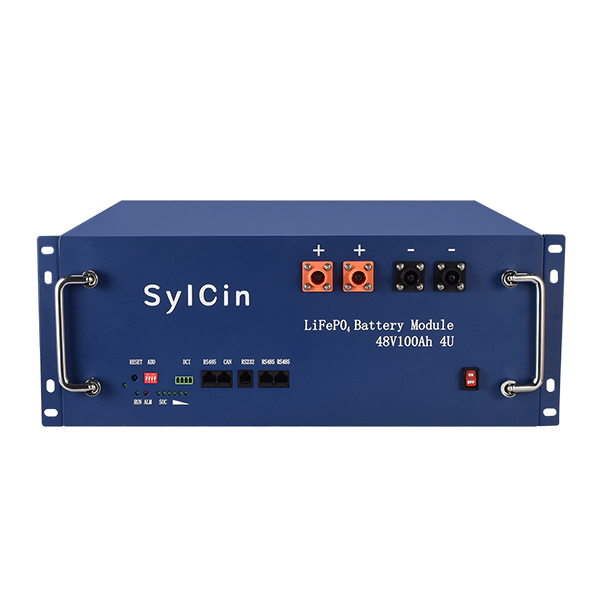
● 48V Lithium Battery
The energy core of the system, supporting parallel expansion and low-loss operation.
● Hybrid / Off-grid Inverter
The “brain” of the system, responsible for energy flow control and load management.
● Solar Panels (optional)
Determine whether the system can achieve long-term energy self-sufficiency.
● BMS + EMS
The BMS ensures safety boundaries, while the EMS defines how intelligently the system operates.
● Power distribution & protection components
Including circuit breakers, surge protection, grounding, and cables.
Simplified Energy Flow Logic
6️⃣ How to Choose the Right Home Storage Capacity? (Key Decision Point)
① Which loads must be protected?
Refrigerator, lighting, router, and basic electronic devices.
② How long should the system run?
4 hours / 8 hours / overnight?
③ Is there stable solar recharging available?
How Long Does a 48V LiFePO4 Battery Really Last?
7️⃣ Why Choose a 48V Lithium Battery Instead of Other Options?
Comparison of Common Home Energy Storage Solutions
|
Comparison Factor |
48V LiFePO4 Battery |
Lead-acid Battery |
12V / 24V Lithium System |
All-in-One Wall Battery |
|---|---|---|---|---|
|
Cycle Life |
4,000–6,000+ |
300–800 |
2,000–4,000 |
4,000–6,000 |
|
Safety |
★★★★★ High thermal stability |
★★☆☆☆ Leakage & sulfation risks |
★★★★☆ |
★★★★★ |
|
System Efficiency |
High (low current, low loss) |
Low (high internal resistance) |
Medium |
High |
|
Scalability |
★★★★★ Parallel expansion |
★★☆☆☆ |
★★★☆☆ |
★★☆☆☆ |
|
Maintenance Cost |
Very low |
High |
Low |
Very low |
|
Installation Flexibility |
High (rack/cabinet) |
Low |
Medium |
Low |
|
Long-term TCO |
⭐⭐⭐⭐⭐ Lowest |
⭐⭐☆☆☆ |
⭐⭐⭐☆☆ |
⭐⭐⭐⭐☆ |
|
Best For |
Long-term home storage |
Low budget, short-term use |
Small systems |
Plug-and-play users |
Conclusion:
If your priority is 5–10 years of stable operation and scalability, rather than the lowest upfront cost, a 48V Lithium Battery is the more rational choice.
8️⃣ Common Design Mistakes & Installation Essentials (Key Points)
-
Avoid selecting capacity that is “just enough”
-
Ensure inverter power matches load demand
-
Always consider surge (startup) power
-
Design the system to support future parallel expansion
Final Thoughts: Why SylCin's 48V Lithium Battery Home Energy Storage Solution?
These are the fundamental reasons why the
48V Lithium Battery Home Energy Storage Solution
continues to be chosen by households worldwide.
48V Solar Battery Parallel System Design Guide
How Long Does a 48V LiFePO4 Battery Last?
Related Article



Best Selling Product








Would you like to talk to us about your battery project?

+0086 075527616594

sylcin02@sylcin.com

Room 1701, Building A, Zhongan Science and Technology Park, Dalang Street, Longhua District, Shenzhen