


How Long Does a 48V LiFePO4 Battery Last?
2025-12-26
Real Runtime for Solar, Home Backup & Off-Grid Systems in Different Regions
When choosing a 48V LiFePO4 battery, real-world runtime often varies far more than expected — especially across different regions and usage scenarios.
-
In North America, it is commonly used for home backup power during grid outages.
-
In Europe, it is widely adopted for residential energy storage and peak shaving.
-
In Australia and Southeast Asia, it is a core component of off-grid solar systems.
Despite these differences, users around the world ask the same question:
→How long can a 48V LiFePO4 battery actually last in real-world conditions?
Some users say, “It easily lasts overnight.”
Others complain, “It runs out much faster than expected.”
In most cases, the issue is not the battery itself, but how runtime is calculated and how the system is designed and used.
This article avoids complex formulas.
Instead, it uses real loads and scenario-based calculations to help you decide:
→ Is a 48V LiFePO4 battery really enough for your system?
How Much Energy Does a 48V LiFePO4 Battery Provide (kWh)?
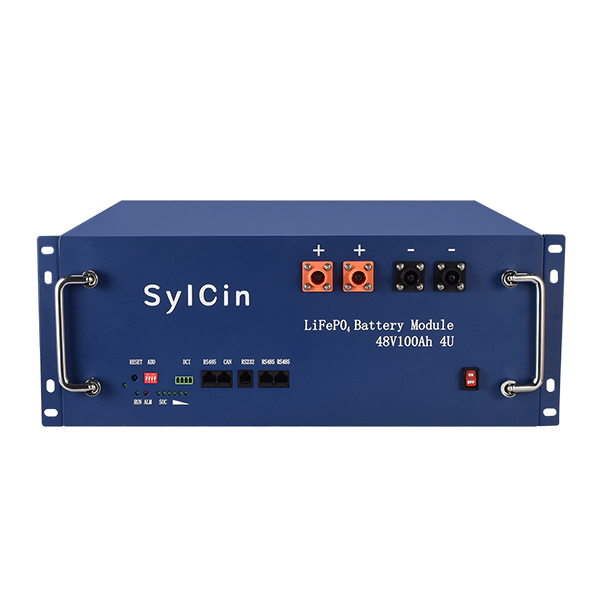
Most 48V LiFePO4 batteries have a nominal voltage of 51.2V.
Nominal energy calculation
51.2V × 100Ah = 5.12 kWh
However, using 100% depth of discharge is not recommended for long-term reliability.
A more realistic way to estimate usable energy
Professional system design usually considers SOC (State of Charge) limits:
Recommended operating SOC range: 20% – 90%
Typical usable portion: 75% – 85%
→ Usable energy ≈ 3.8 – 4.4 kWh
Key takeaway
For practical system planning:
One 48V 100Ah LiFePO4 battery ≈ 4 kWh usable energy
This value is safer, more realistic, and widely used by installers worldwide.
How Long Can a 48V LiFePO4 Battery Power Different Devices?
Before looking at real scenarios, let's align on assumptions.
Calculation assumptions
- Battery: 48V 100Ah LiFePO4
- Usable energy: ≈ 4.1 kWh (80%)
- No solar charging during operation
- Inverter efficiency and temperature effects not finely separated
- Runtime shown for single loads
|
Device
|
Power (W)
|
Estimated Runtime
|
Notes
|
|---|---|---|---|
|
Inverter refrigerator
|
120W
|
≈ 34 hours
|
Typically 2–3 days due to cycling
|
|
Standard refrigerator
|
150W
|
≈ 27 hours
|
High startup surge
|
|
Router
|
15W
|
≈ 270 hours
|
Ideal for backup
|
|
LED light (single)
|
10W
|
≈ 410 hours
|
Multiple lights supported
|
|
Laptop
|
60W
|
≈ 68 hours
|
Office-friendly
|
|
Desktop PC
|
300W
|
≈ 13.5 hours
|
Monitor not included
|
|
55” TV
|
120W
|
≈ 34 hours
|
Depends on brightness
|
|
Fan
|
50W
|
≈ 82 hours
|
Common in hot climates
|
|
Microwave
|
1000W
|
≈ 4 hours
|
Intermittent use only
|
|
Electric kettle
|
1500W
|
≈ 2.7 hours
|
Not for continuous use
|
|
Small water pump
|
750W
|
≈ 5.5 hours
|
Check surge power
|
→ Simple rule:
The lower and more stable the load, the more clearly the advantages of a 48V LiFePO4 battery appear.
Home Backup Power: Is One 48V LiFePO4 Battery Enough?
Scenario description
-
Short-term grid outage backup
-
Covers essential household loads only
-
Excludes high-power appliances (AC, induction cooker)
This setup is common in North America, Europe, and Japan, where users mainly need overnight reliability, not full off-grid autonomy.
Typical essential load combination
|
Device
|
Quantity
|
Total Power
|
|---|---|---|
|
Refrigerator
|
1
|
150W
|
|
LED lights
|
6
|
60W
|
|
Router
|
1
|
15W
|
|
TV
|
1
|
120W
|
|
Phone charging
|
2
|
20W
|
|
Total
|
≈ 365W
|
Estimated runtime: ≈ 8–9 hours
Interpretation
- Easily covers overnight essential power
- Runtime can be extended by reducing TV usage
- Well suited for home backup and UPS systems
→ For system planning, see:48V LiFePO4 Battery Home Energy Storage Solution
Off-Grid Solar at Night: How Does a 48V LiFePO4 Battery Perform?
In small off-grid systems, the most common pattern is:
Solar power during the day → Battery power at night
This setup is widely used in:
-
Australia
-
Southeast Asia
-
Rural Africa
-
Island communities
Typical night-time loads
| Device | Quantity | Total Power |
|---|---|---|
| Refrigerator | 1 | 120W |
| LED lights | 8 | 80W |
| Router | 1 | 15W |
| Fan | 1 | 50W |
| Laptop | 1 | 60W |
| Total | ≈ 325W |
Estimated night runtime: ≈ 11–12 hours
→ This is why many entry-level off-grid systems use a 48V LiFePO4 battery as the standard configuration.
Why Do Many People Feel a 48V LiFePO4 Battery Is “Not Durable”?
In most cases, the issue lies in system design and usage, not battery quality.
❌ Mistake 1: Calculating Runtime Based on 100% Capacity
LiFePO4 batteries perform best within a 20%–90% SOC range.
Frequent deep discharge accelerates degradation.
✔ Correct approach
- Design systems based on ~80% usable capacity
- Configure:
- Low SOC cutoff
- Proper charge cutoff voltage in inverter or BMS
❌ Mistake 2: Ignoring Inverter and System Losses
- Typical inverter efficiency: 90%–95%
- DC-to-AC conversion always causes losses
- Losses accumulate during long runtime
✔ Correct approach
- Choose high-efficiency inverters (≥93%)
- Match inverter size to actual load
- Use DC appliances where possible
❌ Mistake 3: Underestimating Appliance Startup Power
A very common cause of alarms or sudden shutdowns.
Appliances such as:
- Refrigerators
- Water pumps
- Compressors
- Air conditioners
can draw 2–3× rated power during startup.
✔ Correct approach
- Check appliance surge power
- Ensure:
- Inverter continuous power ≥ load
- Inverter surge power ≥ startup demand
If needed:
- Parallel battery modules
- Use batteries with higher discharge current capability
These issues are global and not related to battery brand or chemistry.
Is a 48V LiFePO4 Battery Right for You?
✅ Well suited for:
- Home backup power
- Night-time essential loads
- Systems with daily solar recharging
❌ May not be sufficient if:
- Running high-power devices continuously
- Multi-day autonomy is required without solar input
→ In these cases, consider:
- Paralleling multiple 48V batteries
- Choosing higher-capacity (Ah) models
In many SylCin projects, users start with one 48V LiFePO4 battery and expand modularly as loads grow.
For expansion guidance, see: 48V LiFePO4 Battery Parallel System Design Guide
Quick Summary (3-Second Read)
- Nominal capacity: 5.12 kWh
- Usable energy: ≈ 4 kWh
- Best use cases: energy storage, backup power, small off-grid systems
Real runtime depends on: load power + inverter efficiency + usage strategy
48V Lithium Battery Home Energy Storage Solution
24V Lithium Battery Lifespan & Safety Guide
Related Article

Learn what lithium battery communication is, how BMS exchanges data with inverters, chargers, and control systems, and why communication is essential for safe and intelligent battery operation.
What Is Lithium Battery Communication? How BMS Communication Works with Inverters and Battery Systems
Best Selling Product