


How to Properly Charge a 24V Lithium Battery for Trolling Motors and Electric Boats
Choosing the Battery Is Only the Beginning
— Charging Is Where the Long-Term Difference Starts

Charging, in their minds, feels simple:
Incorrect charging can directly affect:
-
Usable runtime on the water
-
Long-term cycle life
-
System stability and safety on board
It focuses on one practical question:
1. What Does “Charging a 24V Lithium Battery” Really Mean?
1.1 A 24V Lithium Battery ≠ 24V Charging Voltage
One of the most frequent sources of charging problems starts with a simple assumption:
“It's a 24V battery, so I just need a 24V charger.”
In reality, most 24V LiFePO₄ battery systems have a charging cutoff voltage of approximately 29.2V.
“24V” describes the nominal system voltage — not the actual charging voltage required to fully charge the battery.
Why this matters:
- A charger that never reaches the correct voltage may never fully charge the battery
- Users often mistake this for battery degradation or capacity loss
- In reality, the battery has simply never reached a true full charge
Understanding this distinction alone can resolve many “charging issues” before they start.
1.2 Why Old Lead-Acid Chargers Cause Problems — Even If They “Worked Before”
In marine environments, one phrase comes up again and again:
“We've always used this charger on the boat. It worked fine before.”
However, a critical detail is often overlooked:
the previous battery was likely lead-acid, not lithium.
Lead-acid chargers are designed around very different principles:
- Lower voltage thresholds
- Long float-charging stages
- Gradual maintenance charging to stay “full”
These characteristics make sense for lead-acid batteries.
But when applied to a 24V lithium battery system, they frequently create problems:
- Incomplete charging: the battery remains stuck around 85–90%
- BMS interruptions: charging curves conflict with lithium protection logic
- Perceived capacity loss: users feel runtime shrinking over time
This leads to a common but incorrect conclusion:
“This lithium battery doesn't last as long as my old lead-acid setup.”
In most cases, the battery isn't the issue — the charging method never evolved with the system.
2. Choosing the Right Charger for a 24V Lithium Battery in Marine Use
It operates in real conditions: moisture, unstable power sources, frequent plug-ins, and sometimes long periods without supervision.
2.1 “Lithium-Specific” Matters More Than “24V Rated”
-
Lithium battery chemistry (especially LiFePO₄)
-
Correct charging voltage (typically ~29.2V)
-
No uncontrolled or permanent float charging
2.2 Charging Current: Faster Is Not Always Better
-
The battery is still warm from operation
-
Charging occurs frequently in short cycles
-
Reasonable charging time
-
Lower thermal and electrical stress
-
Consistent long-term performance
2.3 Why Marine Charging Conditions Change Everything
-
Humidity and corrosion risk
-
Shore power instability
-
Frequent connection and disconnection
-
Occasional unattended charging
Stable output control, protection features, and good compatibility with battery BMS logic become far more important than raw specifications.
3. Which Charging Parameters Actually Affect a 24V Lithium Battery?
3.1 Charging Voltage: Correct Beats Fast
-
Too low: the battery never fully charges
-
Too high: the BMS may intervene to protect the cells
3.2 Charging Current: Balance Efficiency and Battery Health
Higher current means faster charging, but also:
- Increased heat
- Higher stress on internal components
For trolling motor and electric boat users who cycle batteries frequently, moderate and consistent charging often delivers better long-term performance than aggressive fast charging.
3.3 Charger–BMS Interaction: When “Everything Looks Normal” but Charging Stops
-
The charger appears functional
-
Connections are correct
-
Yet the battery refuses to charge
-
Temperature limits
-
Voltage conflicts
-
Protection thresholds
4. What Are the Most Common Charging Mistakes with a 24V Lithium Battery in Marine Use?
High temperature combined with high current accelerates wear.
Especially during off-season storage, this can negatively impact lithium battery longevity.
Different brands, cables, or unknown components often introduce subtle incompatibilities.
5.How Should You Charge a 24V Lithium Battery Based on How Often You Use It?
High-Frequency Use (Daily, Commercial, Rental)
- Prioritize consistency over speed
- Avoid repeated hot charging cycles
- Allow brief cooldown periods when possible
Regular Recreational Use (Weekends, Fishing Trips)
- Full charging is not always immediately necessary
- Balanced routines reduce long-term stress
Long-Term Storage (Off-Season, Winter)
- Avoid storing at 100% charge
- Maintain a moderate state of charge
- Periodic checks are often sufficient
These strategies reflect how lithium batteries behave over time, not just how they charge once.
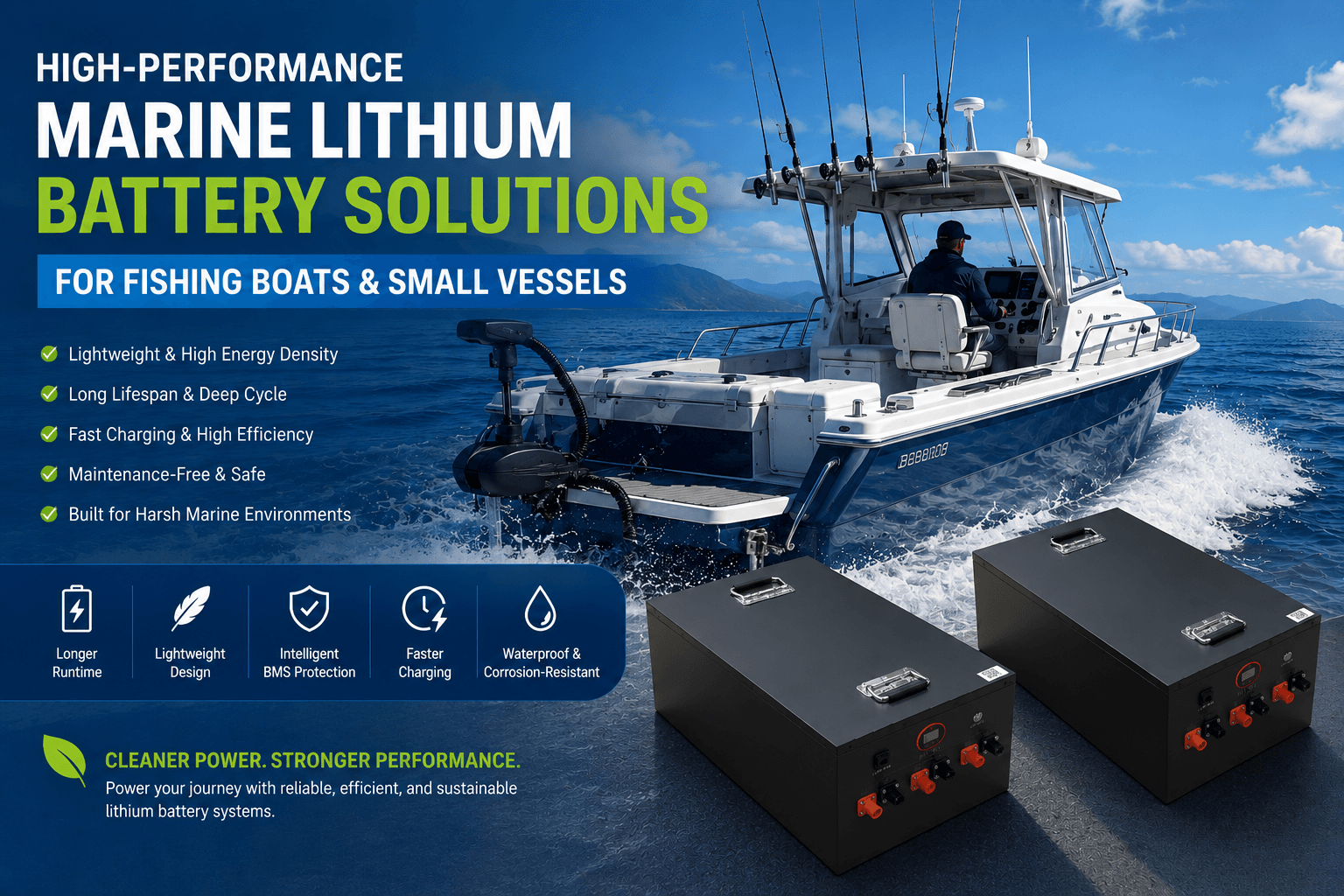
6. How SylCin Designs 24V Lithium Batteries for Real Marine Charging Conditions
This is not about restricting usage — it is about protecting performance under real marine conditions.
-
BMS logic optimized for marine charging patterns
-
Temperature-aware protection strategies
-
Compatibility with stable lithium-specific charging profiles
Conclusion: Charge Correctly, and Runtime and Lifespan Take Care of Themselves
SylCin engineers can help review your charging setup based on your real marine application.
24V Lithium Battery Lifespan & Safety Guide
How Long Does a 24V Lithium Battery Last?
Related Article



Best Selling Product










Would you like to talk to us about your battery project?

+0086 075527616594

sylcin02@sylcin.com

Room 1701, Building A, Zhongan Science and Technology Park, Dalang Street, Longhua District, Shenzhen