


How Close Is Your Lithium Battery to Danger Without a BMS?
2026-01-23
A Critical Safety Lesson for Long-Term Battery Reliability
Introduction: A Risk That Often Looks “Under Control”
Before exploring what can go wrong without a BMS, it is essential to understand the role a BMS plays in a lithium battery system.
If you are new to this topic, we recommend starting with our foundational guide:
What Is a BMS?
If you are new to this topic, we recommend starting with our foundational guide:
What Is a BMS?
A lithium battery BMS is not an optional accessory or a secondary component.
It is an intelligent control system designed to continuously monitor and regulate lithium battery behavior—keeping voltage, current, and temperature within safe operating limits under all operating conditions.
In real-world applications, many battery failures do not happen suddenly.
They develop quietly, under conditions that appear “normal” on the surface.
Without a properly designed lithium battery BMS, even premium-grade cells can gradually drift out of balance, operate outside their ideal parameters, and become unstable over time.
They develop quietly, under conditions that appear “normal” on the surface.
Without a properly designed lithium battery BMS, even premium-grade cells can gradually drift out of balance, operate outside their ideal parameters, and become unstable over time.
The real question is not whether a lithium battery can operate without a BMS—but how long it can remain safe, predictable, and reliable without one.
What Happens When a Lithium Battery BMS Is Missing?
When a lithium battery BMS is absent, the system loses its ability to actively manage risk.
Voltage, current, and temperature are no longer controlled at the cell level.
Minor deviations are not corrected, and over time, these deviations accumulate into irreversible damage or sudden failure.
Voltage, current, and temperature are no longer controlled at the cell level.
Minor deviations are not corrected, and over time, these deviations accumulate into irreversible damage or sudden failure.
This lack of control is especially dangerous in applications involving energy storage systems, industrial equipment, mobile power solutions, and off-grid environments, where operating conditions can change rapidly.
Below are the most critical danger scenarios.
Overcharging: The Direct Trigger of Thermal Runaway
Overcharging is one of the most dangerous failure modes for lithium batteries.
Without a lithium battery BMS, charging depends entirely on external chargers, user behavior, or assumptions about system limits.
Once the charging voltage exceeds safe thresholds:
-
Lithium plating begins on the electrodes
-
Electrolyte decomposition accelerates
-
Internal temperature and pressure rise rapidly
These reactions feed into each other, increasing the risk of thermal runaway.
Without automatic cutoff from a lithium battery BMS, there is no internal mechanism to interrupt this chain reaction.
This is why overvoltage protection inside a lithium battery BMS is considered the first and most essential safety barrier.
At Sylcin, lithium battery BMS protection thresholds are defined during the battery design stage—not added afterward.
Each system is factory-calibrated to disconnect charging before critical limits are reached, ensuring predictable and stable behavior even under fluctuating power input conditions.
Over-Discharge: Permanent Damage You Cannot Undo
Over-discharging is often misunderstood as simply “fully using” a battery.
In reality, when a lithium battery is discharged below its minimum voltage without a lithium battery BMS, permanent internal damage occurs.
This damage includes:
-
Irreversible capacity loss
-
Sharp increases in internal resistance
-
Higher heat generation during subsequent charging cycles
Even if the battery appears to recover temporarily, its long-term reliability is already compromised.
A lithium battery BMS prevents this by disconnecting the load before the voltage reaches unsafe levels.
Sylcin battery systems apply high-resolution voltage monitoring within the lithium battery BMS, ensuring that no individual cell is pushed beyond its safe operating window—even under uneven load conditions.
Short Circuit and Overcurrent: Failure in Microseconds
Short circuits and sudden load spikes can release extremely high currents within microseconds.
Mechanical damage, wiring errors, or unexpected equipment faults can all trigger these events.
Without a lithium battery BMS:
-
Current remains uncontrolled
-
Heat builds faster than materials can dissipate
-
Fire, arc damage, and system failure risks increase dramatically
A lithium battery BMS functions as a high-speed electronic circuit breaker, detecting abnormal current and disconnecting the system almost instantly.
Sylcin lithium battery BMS solutions are tested under extreme fault simulations to ensure repeatable protection performance—even when failures occur faster than human intervention is possible.
Cell Imbalance and Thermal Spread: The Silent Long-Term Threat
No lithium battery pack is perfectly uniform.
Manufacturing tolerances, temperature gradients, and aging differences naturally cause cells to drift apart over time.
Without balancing and thermal monitoring from a lithium battery BMS:
-
Weaker cells degrade at a faster rate
-
Voltage imbalance widens with each cycle
-
Localized overheating increases stress on neighboring cells
These effects often go unnoticed until capacity drops sharply or failure occurs.
Sylcin addresses this risk through strict cell matching and multi-point thermal sensing, allowing the lithium battery BMS to actively maintain balance and thermal stability throughout the battery’s service life.
Beyond Protection: Lithium Battery BMS as a Health Manager
A lithium battery BMS does more than prevent accidents.
It serves as the central intelligence of the battery system.
Key functions include:
-
Accurate state-of-charge (SOC) and state-of-health (SOH) estimation
-
Continuous cell balancing to maximize usable energy
-
Operational data logging for diagnostics, maintenance, and optimization
Without a lithium battery BMS, battery performance becomes inconsistent, maintenance becomes reactive, and service life becomes unpredictable.
Why Integrated Battery Systems Matter
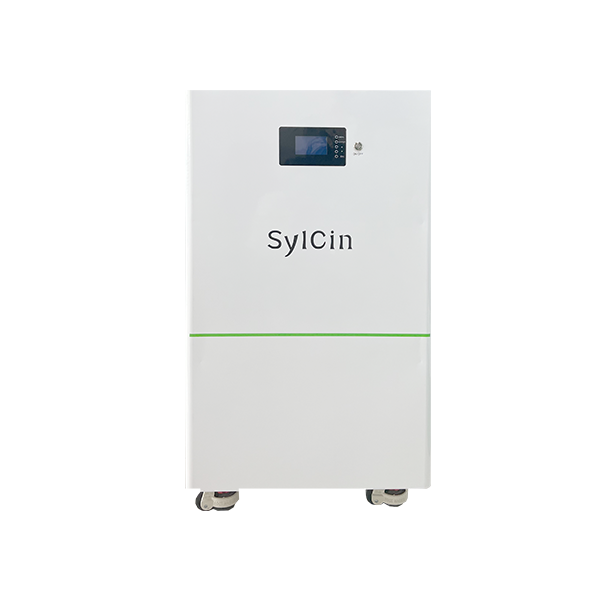
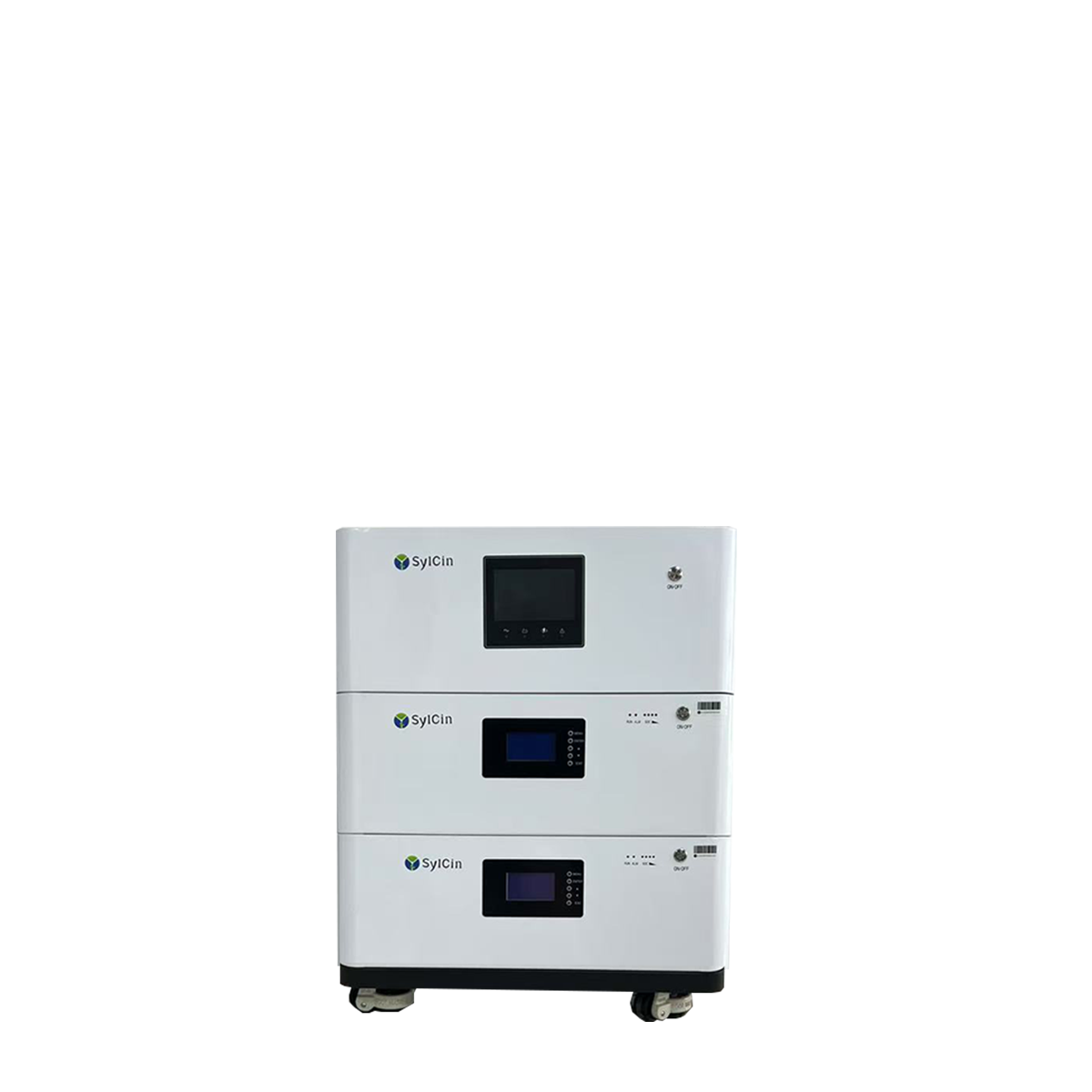
The highest level of safety and reliability comes from native integration between the battery and the lithium battery BMS.
When the battery and BMS are designed as a unified system, protection logic aligns precisely with real cell behavior.
Sylcin designs integrated battery systems with full-chain coordination—from cell selection to BMS hardware and software—ensuring:
-
Protection parameters matched to actual electrochemical characteristics
-
Hardware and software redundancy
-
Long-term stability under real-world operating conditions
Safety is not an accessory. It is a design decision.
Choosing a system with an integrated lithium battery BMS is the most responsible way to protect equipment, investment, and people.
FAQ: Lithium Battery BMS
Q1: Can a lithium battery operate without a BMS?
Yes, briefly—but it cannot operate safely, predictably, or reliably without a lithium battery BMS.
Q2: Is a protection board the same as a lithium battery BMS?
No. A protection board provides basic cutoff functions, while a lithium battery BMS enables continuous monitoring, balancing, diagnostics, and communication.
Q3: Does a LiFePO4 battery still need a lithium battery BMS?
Yes. Although LiFePO4 chemistry is more stable, a lithium battery BMS remains essential for long-term safety, consistency, and lifespan management.
Q4: Why choose an integrated battery system instead of an external BMS?
Integrated systems ensure faster response, better parameter matching, and higher overall reliability—especially under high-load or fault conditions.
Battery with BMS: Why System-Level Design Matters More Than Protection
What Is a Battery BMS System?
Related Article

Learn what lithium battery communication is, how BMS exchanges data with inverters, chargers, and control systems, and why communication is essential for safe and intelligent battery operation.
What Is Lithium Battery Communication? How BMS Communication Works with Inverters and Battery Systems
Best Selling Product