


How to Safely Expand Off-Grid Solar System Capacity
2026-01-16
Solving the Core Problem of “The More You Expand, the More Unstable It Becomes”
Many off-grid solar systems operate smoothly during their initial phase.
Loads are limited, battery capacity feels sufficient, and the system appears stable.
Loads are limited, battery capacity feels sufficient, and the system appears stable.
However, as energy demand grows over time, problems often begin to surface:
- Battery capacity becomes insufficient, leading to frequent nighttime power outages
- After new loads are added, the inverter starts alarming or shutting down
- Even after installing more solar panels, system stability does not improve
At first glance, these issues may seem unrelated. In reality, they all share the same root cause:
Expansion was performed, but at the wrong system level.
This article focuses on off-grid solar system design from an expansion perspective.
Its purpose is clear: to help you understand how to expand an off-grid solar system in a way that remains safe, stable, and controllable over the long term, rather than creating new risks.
Its purpose is clear: to help you understand how to expand an off-grid solar system in a way that remains safe, stable, and controllable over the long term, rather than creating new risks.
If you are not yet fully familiar with the basic structure of an off-grid system, we recommend reading our previous article first:
What Is an Off-Grid Solar System?
A clear understanding of system architecture is the foundation of every correct expansion decision.
What Is an Off-Grid Solar System?
A clear understanding of system architecture is the foundation of every correct expansion decision.
1. The Most Common Misunderstanding: Expansion Equals Adding Equipment
In SylCin's project consultations, we frequently hear statements such as:
-
“The battery is not enough. Should we just add more batteries?”
-
“The voltage is unstable during the day. Can we install more solar panels?”
-
“The load has increased. Should we replace the inverter with a larger one?”
These questions all focus on individual components rather than the system as a whole.
From an off-grid solar system design standpoint, this approach is fundamentally flawed.
Off-grid systems are tightly coupled energy systems. Batteries, inverters, and solar arrays do not operate independently. Any change to one layer affects the others. Simply stacking components without redesigning the system structure often leads to instability.
→ Off-grid system expansion is not equipment accumulation. It is system-level redesign.
2. Four Critical Questions to Answer Before Any Expansion
Before making any expansion decision, SylCin always helps customers reassess their system by answering four key questions:
-
Has daily energy consumption actually increased, and by how much?
-
Has peak power demand changed, especially due to new high-power loads?
-
Does energy demand primarily occur during the daytime or at night?
-
Is the current bottleneck in energy generation, storage capacity, or output power?
These questions may seem basic, but skipping them is one of the most common reasons expansion fails.
Only after these factors are clearly defined can you determine whether the correct expansion path lies in the battery system, the PV array, or the inverter layer.
3. Why Off-Grid Expansion Must Be Battery-Centered
This is the most overlooked, yet most critical principle in off-grid solar system design:
The component that directly powers loads is not the solar panels, but the battery system.
In an off-grid solar system:
The component that directly powers loads is not the solar panels, but the battery system.
In an off-grid solar system:
-
Solar panels generate energy
-
Batteries store and release energy
-
Inverters convert energy for load use
As long as the system is operating, loads are always powered from the battery side. Even during the daytime, solar energy is first processed through the battery and power electronics before reaching the load.
This is why SylCin follows a consistent expansion logic:
Design the battery architecture first, match the inverter second, and determine solar capacity last.
If the battery system is unstable, non-expandable, or poorly integrated, any additional capacity added elsewhere will only magnify system risk.
This is why SylCin follows a consistent expansion logic:
Design the battery architecture first, match the inverter second, and determine solar capacity last.
If the battery system is unstable, non-expandable, or poorly integrated, any additional capacity added elsewhere will only magnify system risk.
For more details on how the entire system works, check out How Off-Grid Solar System Architecture Works.
4. The Correct Way to Safely Expand Battery Capacity
When customer issues primarily include:
-
Longer nighttime operating hours
-
Higher backup power requirements
-
Sufficient solar generation but insufficient stored energy
SylCin typically recommends prioritizing battery expansion.
However, battery expansion must follow strict technical rules to remain safe and scalable:
-
The same voltage platform, typically 48V
-
The same battery chemistry, such as LiFePO₄
-
Modular designs that support parallel connection
-
Consistent BMS communication and balancing logic
Ignoring any of these factors can lead to imbalance, reduced lifespan, or system faults.
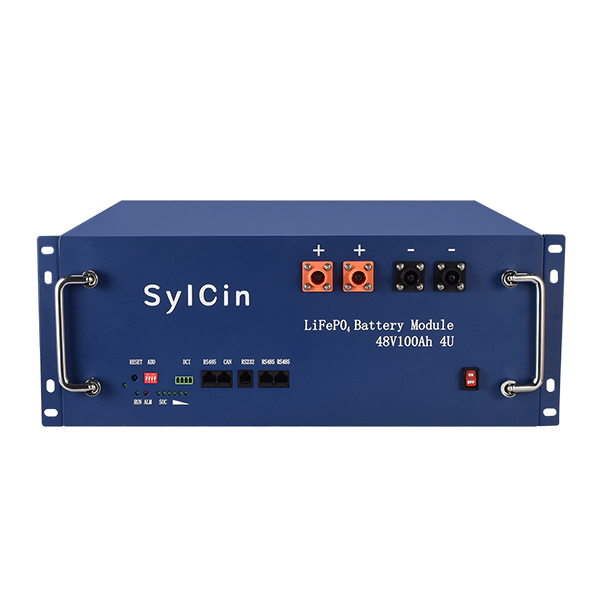
This is why SylCin's off-grid solutions adopt a modular, parallel-expandable 48V energy storage architecture from the initial design stage. The goal is simple:
to ensure that future expansion does not require dismantling or replacing the original system.
to ensure that future expansion does not require dismantling or replacing the original system.

5. When Solar Capacity Should Be Expanded Instead of Adding Batteries
Not all capacity problems originate from insufficient storage.
In many systems, the real issue is inadequate charging capability, such as:
-
Slow recovery after consecutive cloudy or rainy days
-
Batteries failing to reach full charge during daylight hours
-
The system remaining at a low state of charge for extended periods
In these situations, adding more batteries only increases charging time and stress on the system.
From an off-grid solar system design perspective, solar expansion should only be considered after verifying that the system can safely absorb additional energy.
SylCin evaluates solar expansion by checking:
-
Available input capacity of MPPT charge controllers
-
Maximum allowable charging current of the battery system
-
Whether cables, breakers, and protection devices require upgrades
→ Solar expansion is only safe when the downstream system is designed to accept it.
6. Why Many Expansion Failures Are Inverter-Level Problems
If the expansion goal involves:
-
Powering more equipment
-
Starting larger motors
-
Increasing instantaneous output capability
Then the bottleneck is often not battery capacity, but inverter architecture.
Common inverter-related mistakes observed by SylCin include:
-
Ignoring surge and startup power requirements
-
Forcing a single inverter to handle all loads
-
Using parallel inverter systems without proper load separation
A more reliable approach within professional off-grid solar system design includes:
-
Using off-grid inverters that support parallel operation
-
Designing load distribution based on load characteristics
-
Ensuring that the inverter always serves the battery system, not the other way around
7. Why SylCin Emphasizes Scalable System Architecture
The safest expansion strategy is not reactive correction, but proactive design.
From the very beginning, SylCin's off-grid system designs consider:
-
Future battery parallel expansion
-
Gradual PV array enlargement
-
Power upgrades without dismantling the original system
This design philosophy allows systems to grow alongside user demand without sacrificing stability or safety.
It is also why SylCin's solutions are particularly well-suited for long-term off-grid and weak-grid applications.
Conclusion: Expansion Is Not Addition, but System Rebalancing
If you are currently facing an off-grid system expansion challenge, remember this:
-
Done right, expansion is a system upgrade
-
Done wrong, expansion is the accumulation of hidden risks
A truly safe expansion strategy always starts with off-grid solar system design, centers on energy storage, and verifies every system boundary step by step.
This is the design logic SylCin has consistently applied across off-grid and weak-grid energy projects worldwide.
What Is a Battery BMS System?
How Off-Grid Solar System Architecture Works – System Design Explained
Related Article

Learn what lithium battery communication is, how BMS exchanges data with inverters, chargers, and control systems, and why communication is essential for safe and intelligent battery operation.
What Is Lithium Battery Communication? How BMS Communication Works with Inverters and Battery Systems


Best Selling Product








Would you like to talk to us about your battery project?

+0086 075527616594

sylcin02@sylcin.com

Room 1701, Building A, Zhongan Science and Technology Park, Dalang Street, Longhua District, Shenzhen